Teaching Patience: Proven Ways for Effortless Delayed Gratification
In today’s fast-paced world, teaching patience, particularly the art of delayed gratification, is more crucial than ever. Emphasizing this essential skill can significantly shape a child’s future success, emotional intelligence, and overall academic performance. Parents and educators seeking proven methods to instill patience will find this guide invaluable as it explores actionable strategies and insights.
Understanding Patience and Delayed Gratification
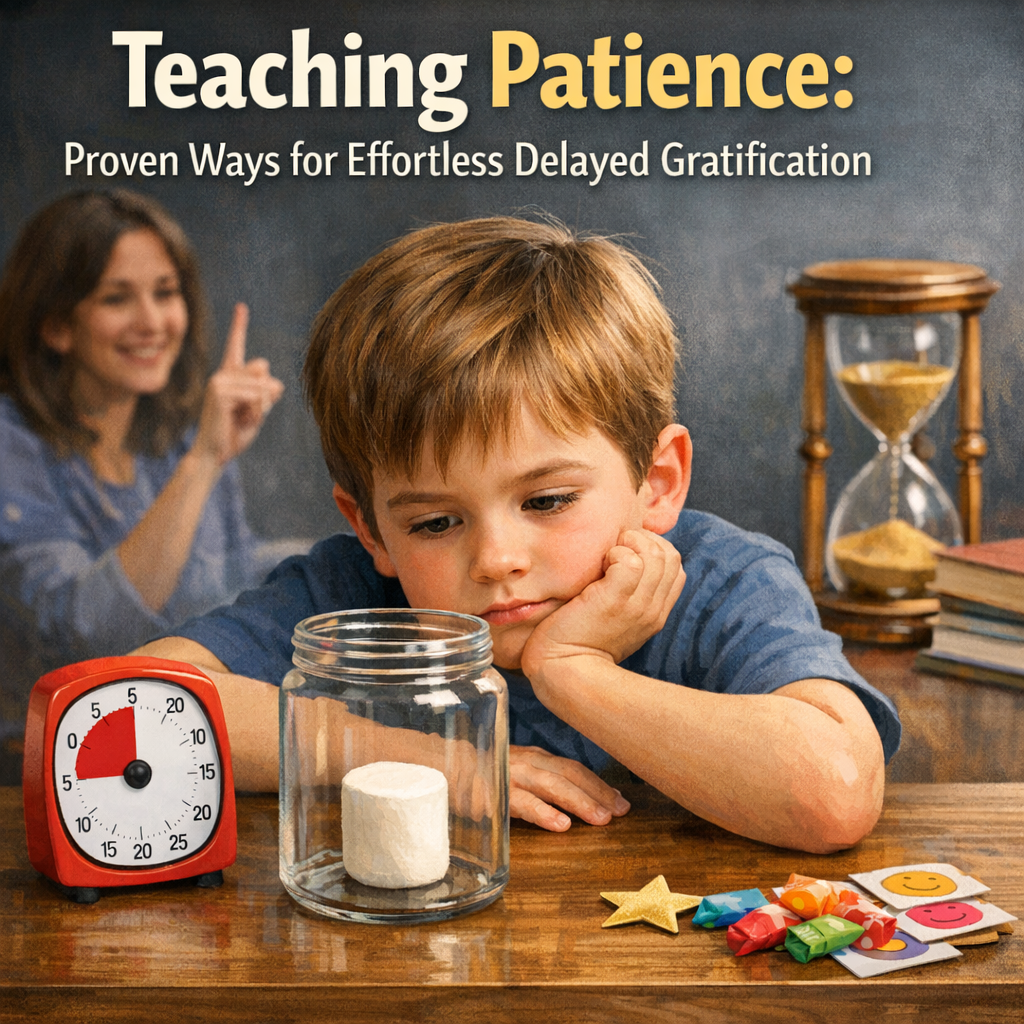
What Is Delayed Gratification?
Delayed gratification refers to the ability to resist an immediate reward in preference for a later, often more desirable outcome. It is a crucial component of self-control and discipline. This skill is increasingly significant in an era where instant gratification is the norm, fueled by technology and rapid access to information.
Why Is Teaching Patience Important?
– Emotional Development: Patience helps children manage stress and frustration, enhancing emotional regulation.
– Academic Success: Students who master delayed gratification perform better academically and are more likely to pursue higher education.
– Social Skills: Learning to wait and consider others’ needs fosters empathy and cooperation.
Strategies for Teaching Patience and Delayed Gratification
1. Model Patience in Everyday Situations
Children learn by observing adults. Demonstrating patience in daily activities can effectively teach children the same.
– Verbalize Your Process: Explain when you’re waiting for something, like saying, “I’m waiting patiently for the coffee to brew.”
– Share Your Feelings: Acknowledge feelings of frustration and how you cope, such as taking deep breaths.
2. Use Games to Reinforce Patience
Games offer a fun, engaging way to practice delayed gratification.
– Board Games: Games requiring turn-taking develop patience naturally.
– Timed Challenges: Give tasks with a timer to encourage completing activities within a set period.
3. Set Realistic, Achievable Goals
Teaching children to set and work towards goals can enhance their patience and perseverance.
– Short-term Goals: Start with achievable targets to build confidence.
– Visual Progress: Use charts or graphs to track progress toward goals.
4. Encourage Mindfulness and Meditation
Mindfulness practices can significantly enhance patience and calmness.
– Simple Breathing Exercises: Teach children to focus on their breath to manage impatience.
– Guided Meditation: Use resources like the “Brain Baba Kids Learning App” to access child-friendly mindfulness exercises. Download the app for kids.
5. Implement a Reward System
A structured reward system can motivate children to practice patience and delay gratification.
– Immediate Rewards: Offer small, immediate incentives while they wait for larger rewards.
– Delayed Rewards: Encourage waiting longer for more significant rewards, gradually increasing the time as their patience improves.
Encouraging Patience Through Everyday Activities
6. Incorporate Patience in Daily Routines
Daily routines provide numerous opportunities for fostering patience.
– Cooking Together: Cooking can teach waiting as they anticipate the final dish.
– Gardening: Watching plants grow instills the value of time and patience.
7. Storytelling and Reading
Stories often involve characters who must wait, providing relatable scenarios for children.
– Books About Waiting: Choose books that highlight characters demonstrating patience.
– Discuss Story Themes: Engage children in discussions about why the characters had to wait and the outcomes.
8. Teaching Through Art and Creativity
Creative activities can also foster patience and the ability to focus on long-term projects.
– Art Projects: Encourage artwork that takes time, like painting or sculpture.
– Music Lessons: Learning an instrument requires dedication and the ability to tolerate delayed rewards.
Internal Resources and Further Exploration
For more on developing resilience and emotional strength in children, explore our articles on building social skills in kids and fostering emotional intelligence. These resources complement efforts to teach patience by enhancing children’s overall character development.
Common Challenges and How to Overcome Them
Identifying Struggles With Impatience
– Frequent Complaining: If a child often voices frustration over waiting, this signals a need for patience-building activities.
– Difficulty in Schoolwork: Struggles with tasks requiring focus may indicate a lack of delayed gratification skills.
Customizing Approaches
Every child is unique, and patience should be taught with methods tailored to individual needs.
– Personalized Goals: Customize goal-setting according to each child’s interests and strengths.
– Flexible Methods: Be open to mixing strategies that suit the child’s learning style.
Celebrating Success
– Acknowledge Progress: Recognize and praise improvements in patience.
– Reflect Together: Talk about how patience led to positive outcomes, reinforcing its value.
FAQ
What is the best age to start teaching patience to children?
It’s never too early to begin teaching patience. Even toddlers can learn simple waiting games. Patience is a skill that can be developed at any age through consistent practice and guidance.
How can I help my child who struggles significantly with waiting?
Start small with brief waiting periods and gradually increase the time. Use visual timers and engage them in distractions during wait times to make it easier. Patience practices like breathing exercises can also aid in calming anxious thoughts.
Are there any tools or apps to support teaching delayed gratification?
Yes, there are numerous resources available. The “Brain Baba Kids Learning App” offers an array of activities designed to enhance learning and patience in children. Download the app for kids for engaging tools and exercises.
How do patience and emotional intelligence relate?
Patience is a cornerstone of emotional intelligence. It helps individuals regulate emotions, empathize with others, and handle stress more effectively, contributing to better interpersonal relationships and decision-making.
Is it possible to teach patience to teenagers?
Absolutely. Teenagers can benefit from goal-setting exercises, mindfulness practices, and discussions about the consequences of impatience. Tailoring activities to their interests can make the process more engaging.
Conclusion and Call to Action
Teaching patience and delayed gratification is a gradual, rewarding journey that can impact a child’s life profoundly. By implementing these proven methods, you can equip your child with the skills necessary for academic success and emotional maturity. Start incorporating these strategies today and witness a transformation in your child’s ability to wait, self-regulate, and achieve long-term goals. To dive deeper into fostering essential skills, browse our comprehensive resources on child development. Take the first step toward a brighter future for your child by nurturing patience today.