Teaching Kindness for Compassionate Kids: Must-Have Daily Actions
In today’s rapidly changing world, nurturing compassionate kids is more crucial than ever. Teaching kindness not only enhances a child’s social development but also equips them with skills essential for their future interactions. This comprehensive guide will explore actionable strategies and daily actions necessary to cultivate empathy and kindness in children, providing practical advice for parents and educators alike.
Introduction to Teaching Kindness
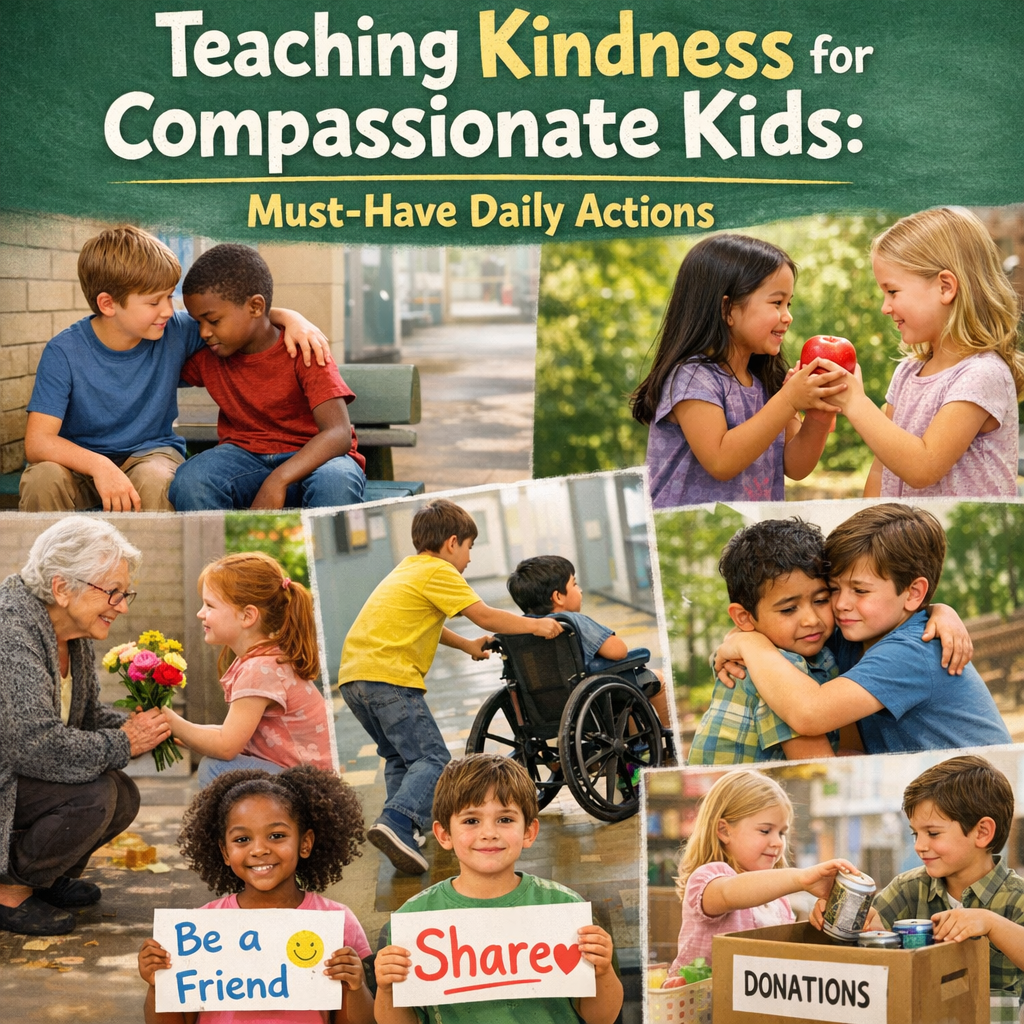
The importance of teaching kindness cannot be overstated. It lays the foundation for developing compassionate kids who can navigate social environments with empathy and understanding. Kindness is not just an innate trait; it requires guidance, practice, and reinforcement. This article delves into various actionable strategies to instill kindness in children, promoting a more harmonious and inclusive environment for all.
Why Kindness Matters in Child Development
Empathy and compassion play pivotal roles in a child’s development. Here’s why focusing on these attributes is essential:
– Social Skills: Kindness enhances social interactions, helping children build positive relationships.
– Emotional Intelligence: When kids practice empathy, they improve their emotional intelligence, understanding both their emotions and those of others.
– Conflict Resolution: Compassionate kids are better equipped to handle conflicts and disagreements peacefully.
Understanding Emotional Intelligence
A primary component of teaching kindness is enhancing a child’s emotional intelligence. It involves:
1. Recognizing Emotions: Helping children identify and label their emotions.
2. Understanding Empathy: Teaching kids to see situations from others’ perspectives.
3. Regulating Emotions: Guiding them to manage emotions constructively.
Must-Have Daily Actions to Teach Kindness
Embedding kindness into a child’s daily routine requires commitment and creativity. Here are some essential actions and strategies:
1. Model Kind Behavior
Children learn by observing adults. Regularly demonstrate acts of kindness, and explain your actions so they understand their significance.
– Volunteer as a family.
– Offer help to neighbors in need.
– Show gratitude in everyday interactions.
2. Encourage Empathetic Conversations
Discuss feelings regularly to help children express and understand emotions.
– Ask open-ended questions about their day.
– Discuss scenarios that require empathy, encouraging thoughtful responses.
– Role-play different situations to explore emotional reactions.
3. Use Storytelling to Illustrate Kindness
Stories are powerful tools in teaching concepts like empathy and understanding.
– Choose books that highlight diverse experiences and the impact of kindness.
– Discuss characters’ emotions and motivations with children.
– Encourage kids to create their own stories that emphasize kindness and compassion.
4. Create a Kindness Chart
Visual aids can reinforce daily acts of kindness.
– Develop a kindness chart where children can track and celebrate their kind deeds.
– Set achievable goals and reward consistent kind behavior.
– Include a variety of acts, such as sharing, helping, and expressing gratitude.
5. Promote Collaborative Play and Activities
Children often learn best through play. Foster cooperative activities that require teamwork and patience.
– Organize group activities that require collaboration.
– Engage in games that emphasize sharing and empathy.
– Use such experiences to discuss the importance of cooperation and understanding.
6. Foster a Positive Environment
A nurturing environment helps children practice kindness naturally.
– Create spaces where children feel safe to express their feelings.
– Encourage positive reinforcement and constructive feedback.
– Limit exposure to negative influences, promoting content that supports positive values.
7. Integrate Technology for Learning Kindness
Incorporate digital tools that teach empathy and kindness.
– Use educational apps like the Brain Baba Kids Learning App to introduce concepts of sharing and compassion.
– Explore games and activities that emphasize kindness and empathy.
Supporting Resources and Further Reading
Understanding kindness goes beyond basic actions. Here are some additional resources and readings to further enhance your approach:
– Books on Empathy: Invest in a range of children’s books specifically focused on empathy and kindness.
– Educational Workshops: Enroll children in workshops that focus on social and emotional learning.
– Community Involvement: Engage in community service projects to provide real-world experience in practicing kindness.
Internal Links to Expand Your Knowledge
– Explore our article on Building Resilience in Children for insights into nurturing emotional strength.
– Learn about Promoting Inclusivity in Classrooms to foster a more empathetic educational environment.
– Check out Effective Parent-Child Communication Strategies for enhancing empathy through conversation.
FAQs on Teaching Kindness and Compassion
How can I teach my child to be more empathetic?
To foster empathy, encourage open discussions about emotions, model empathetic behavior yourself, engage in role-playing activities, and introduce them to diverse perspectives through books and media.
What activities can help in nurturing compassion in children?
Activities such as community service, storytelling, collaborative games, and using educational apps like the Brain Baba Kids Learning App can significantly nurture compassion.
How do I handle negative behavior that contradicts lessons of kindness?
Address negative behavior by calmly discussing the impact of their actions on others, offering constructive feedback, and guiding them to apologize or make amends. Reinforce positive behavior with praise.
Can technology be used effectively in teaching kindness?
Absolutely! Integrating apps and digital games focused on empathy can complement traditional teaching methods, making learning engaging and interactive.
Why is storytelling effective in promoting kindness?
Stories allow children to explore emotions and situations they might not experience directly, providing a safe platform to learn and practice empathy and kindness.
Conclusion: Actioning Kindness Daily
Teaching kindness is a continuous and evolving journey. By incorporating these daily actions, parents and educators can foster environments that nurture compassionate kids, equipping them with crucial social and emotional skills. Begin this rewarding journey today and watch as small, consistent efforts blossom into significant transformations.
For more insights and tools to teach kindness effectively, consider exploring educational apps such as the Brain Baba Kids Learning App. Embrace the power of kindness as we nurture a generation of empathetic, compassionate individuals.