Reading Challenges: Discover Must-Have Library Fun for Kids!
Engaging children in reading can be a rewarding yet challenging task for many parents and educators. Reading challenges serve as an innovative way to captivate young minds and instill a lifelong love of literature. In this comprehensive guide, we will explore the concept of reading challenges, how to make them exciting through library activities, and provide actionable strategies you can implement immediately. Whether you are a parent searching for fresh ideas or an educator aiming to enhance your classroom’s reading environment, you will find valuable insights here.
The Importance of Reading Challenges for Children
Cultivating a Love for Reading
Reading challenges offer an excellent opportunity to introduce children to diverse genres, authors, and topics. By exposing them to various literary worlds, children develop curiosity, which is a key factor in fostering a passion for reading. Creating a structured challenge with achievable goals can encourage reluctant readers to take the first step.
Enhancing Comprehension Skills
Engaging with different types of texts boosts comprehension skills. As children navigate different challenges, they learn to decode complex vocabulary, understand narratives, and grasp the nuances of language. Regular practice through reading challenges can contribute significantly to their academic success.
Boosting Confidence and Motivation
When children complete reading challenges, they experience a sense of achievement that boosts their confidence. This sense of accomplishment motivates them to tackle more difficult texts and develop a proactive approach to learning.
Designing Engaging Reading Challenges
Setting Clear Objectives
Before introducing a reading challenge, it’s essential to establish clear, age-appropriate goals. Objectives could focus on completing a certain number of books, exploring diverse genres, or enhancing specific reading skills.
Creating a Reward System
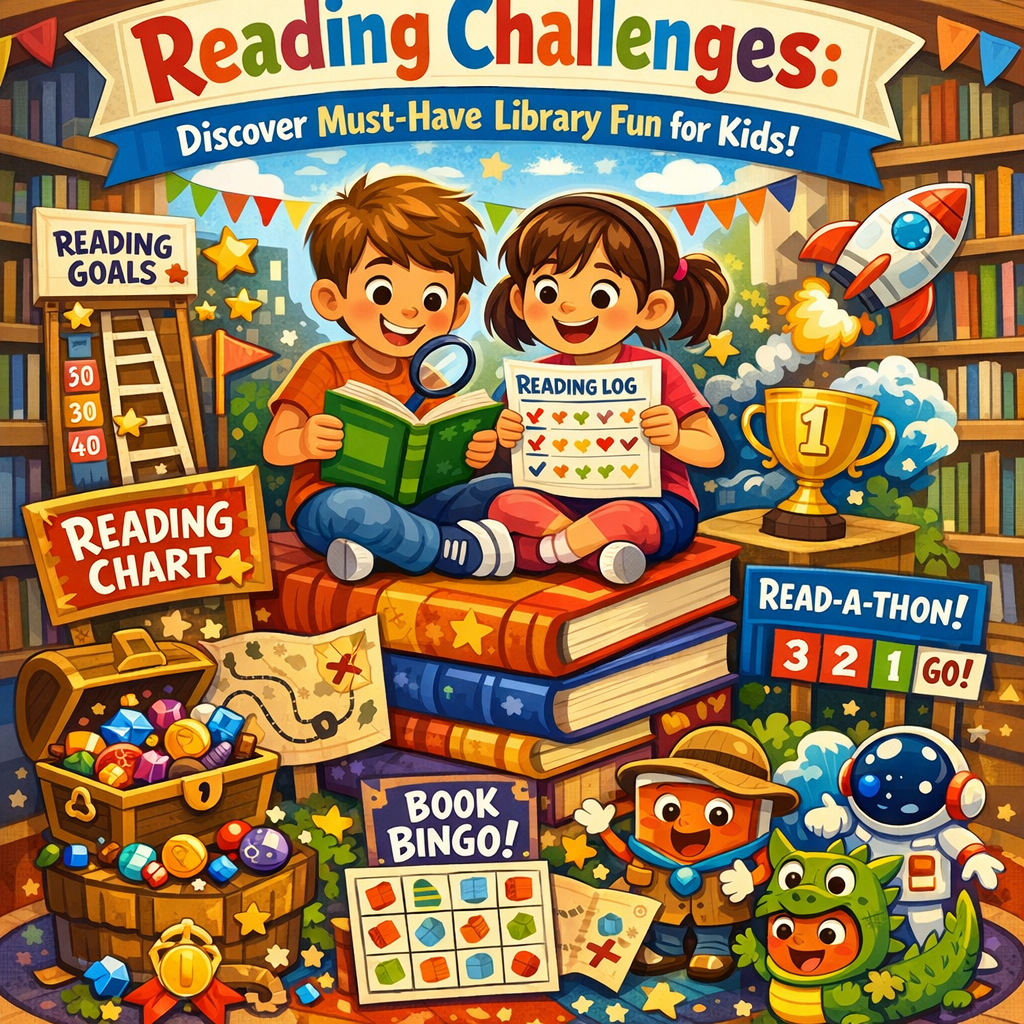
Motivation is key in sustaining children’s interest. Implementing a reward system, such as a sticker chart or prizes for milestones achieved, can provide tangible incentives. However, the intrinsic reward of enjoying a book should always remain the ultimate goal.
Incorporating Fun Themes
Introducing thematic reading challenges can make the experience more exciting. Themes like “Under the Sea,” “Space Adventures,” or “Classic Fairy Tales” can capture children’s imaginations and make reading a delightful experience.
Must-Have Library Activities for Kids
Interactive Storytelling Sessions
Libraries often host interactive storytelling sessions that bring stories to life. These events can be a powerful tool in making reading a shared experience that stimulates children’s imaginations.
Craft and Story Workshops
Combining reading with hands-on activities like crafts can reinforce the narrative. For example, after reading a story about animals, children could make animal masks. This multi-sensory approach reinforces comprehension and retention.
Book Clubs for Young Readers
Encouraging children to discuss books with peers in a book club setting nurtures critical thinking and communication skills. A structured yet casual environment allows kids to express their thoughts and feelings about what they’ve read.
Digital Innovation: The Brain Baba Kids Learning App
Incorporating technology can further enhance reading experiences. The Brain Baba Kids Learning App is an excellent resource for interactive learning and reading. This app offers a plethora of features designed to engage and educate young minds through fun and innovative methods.
Encouraging Parental Involvement
Building the Habit of Reading Together
Parents can foster a love of reading by setting aside dedicated time to read with their kids. Reading together creates bonding opportunities and helps children associate reading with warmth and security.
Creating a Home Library
A well-stocked home library encourages frequent reading. Include a diverse range of books that cater to your child’s interests alongside classics that provide cultural and educational value.
Supporting Literacy Development at Home
Play literacy-based games, label items around the house, and have discussions about books. These simple steps reinforce the importance of literacy and support reading challenges effectively.
Recommendations for Library Fun Resources
Leveraging Community Resources
Many libraries offer programs and resources designed to make reading fun. Check your local library’s calendar for workshops, storytelling sessions, and reading competitions.
Utilizing Online Platforms
Online platforms have widened access to a vast array of books and reading activities. Websites like Epic! and Scholastic provide e-books and reading challenges that can be accessed from home or school.
Expanding Through Educational Apps
Beyond physical libraries, digital libraries and educational apps can provide an expansive library of books and educational content. Incorporating these into reading challenges can make learning accessible and portable.
Motivating Reluctant Readers
Identifying Interests
Understand your child’s interests and tailor reading challenges accordingly. Whether it’s dinosaurs, magic, or sports, there’s a book out there that will captivate their attention.
Introducing Audiobooks
For children who struggle with traditional reading, audiobooks offer an alternative that’s equally engaging. Listening to stories read aloud can improve comprehension and pronunciation.
Setting Achievable Goals
Break down reading challenges into smaller, manageable tasks. This approach reduces overwhelm and allows children to experience regular successes that keep them motivated.
Frequently Asked Questions
What are some effective ways to start a reading challenge at home?
Begin by letting your child choose books that interest them. Create a chart to track their progress and celebrate small milestones. Set a realistic timeline for completion and incorporate fun rewards.
How can libraries help in promoting reading among children?
Libraries offer a plethora of resources, including storytelling sessions, book clubs, and craft workshops. They provide a community-focused approach to reading that encourages social interaction and learning.
Can reading challenges improve a child’s academic performance?
Yes, reading challenges enhance comprehension skills, vocabulary, and critical thinking, all of which contribute to improved academic performance. Regular reading practice through well-designed challenges supports overall cognitive development.
Are there digital tools that can support reading challenges?
Absolutely! The Brain Baba Kids Learning App is an example of a digital tool that makes reading interactive and engaging for children. It provides educational games and resources that support literacy development.
What if my child is uninterested in reading challenges?
Explore their interests and incorporate them into the reading material. Utilize different formats like graphic novels or audiobooks, and don’t pressure them. The goal is to create a positive association with reading.
Conclusion
Reading challenges are a powerful method to excite children about reading, improve their literacy skills, and foster a lifelong love of books. By incorporating library activities, engaging digital tools, and encouraging family participation, you can transform the reading experience into an enjoyable adventure. Start planning your reading challenge today and watch your child’s love for literature grow! For more insights and resources, explore our articles on Creating a Cozy Reading Nook and Top Children’s Books for 2023. Your journey into the world of reading begins now—take the first step and see where it leads!