Money for Kids: Unlock Stunning Financial Literacy Skills Early
In today’s ever-changing economic landscape, teaching money skills to kids has never been more crucial. Financial literacy isn’t just about counting coins or understanding how to make change; it’s about laying a foundation for a stable, informed financial future. This comprehensive guide will explore how to instill robust financial literacy skills in children from an early age, equipping them with essential life skills that will serve them for a lifetime.
Understanding Financial Literacy for Kids
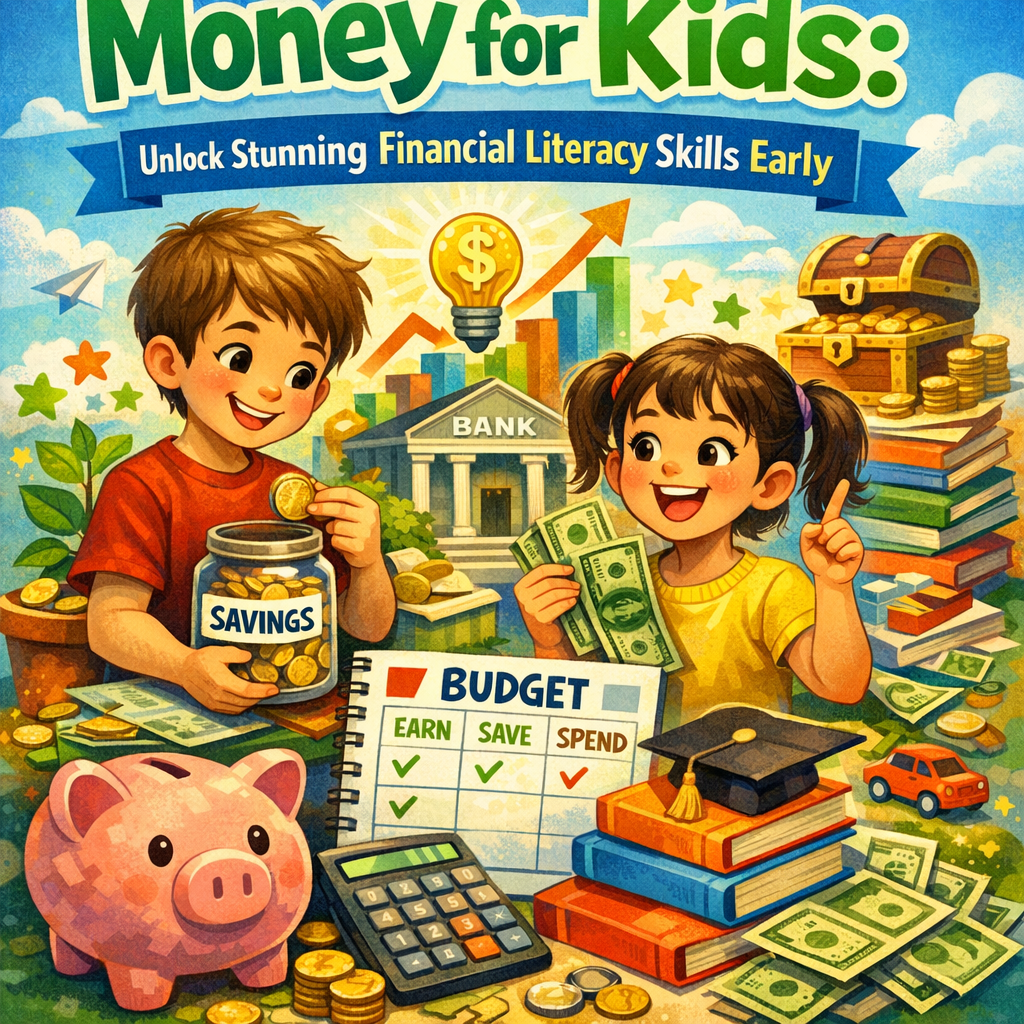
What is Financial Literacy?
Financial literacy involves understanding and applying various financial skills, including personal financial management, budgeting, and investing. For kids, it means grasping basic economic concepts like money management, saving, spending, and the importance of balancing income with expenses.
Why Start Early?
1. Foundation for the Future: Starting early instills positive money habits.
2. Reducing Anxiety: Familiarity with finances can reduce stress and fear about money issues in adulthood.
3. Building Confidence: Knowledge about financial matters boosts confidence and decision-making abilities.
How to Teach Money for Kids
Interactive Games and Activities
A fun and effective way to teach financial literacy is through games designed to engage and educate.
– Monopoly Junior: This classic game introduces kids to buying, selling, and fee management.
– Allowance Apps: Tools like Greenlight allow kids to manage their allowance digitally, providing real-world practice in saving, spending, and setting goals.
Practical Home Involvement
Incorporating money lessons into daily life at home helps reinforce financial skills.
– Savings Jars: Divide allowances into spend, save, and donate jars to teach budgeting and priority setting.
– Grocery Shopping: Involve kids in making shopping lists and comparing prices to understand budgeting and value.
Educational Resources
Children’s books and educational programs are fantastic resources that can make learning about money enjoyable.
– Books: Titles like “Money Ninja” by Mary Nhin make complicated concepts accessible.
– Apps and Digital Tools: The Brain Baba Kids Learning App offers engaging lessons and activities on money for kids.
The Role of Schools in Financial Literacy
Incorporating Money Lessons into Curriculum
School programs play a significant role in developing financial literacy. Here’s how:
– Math Integration: Incorporating practical money problems into math lessons.
– Field Trips: Visits to local banks or stock exchanges can illuminate real-world financial operations.
Workshops and Clubs
Schools can establish finance clubs or workshops to engage students in financial contexts outside the classroom.
– Investment Clubs: Simulate stock market investing and learn about risk and reward.
– Entrepreneurial Challenges: Encourage students to develop business ideas and plans.
The Influence of Technology on Financial Literacy
Digital Tools and Apps
Modern technology has provided countless opportunities to educate kids about money.
– Budgeting Apps for Kids: Tools like PiggyBot help in tracking spending and saving.
– Online Simulations: Simulated stock markets or investment apps introduce kids to investment concepts safely.
Parental Controls and Guidance
Parents can use technology to guide financial learning while maintaining necessary control.
– Setting Spending Limits: Many apps allow parents to set limits, helping kids learn within boundaries.
– Checking Account Activities: Review spending habits and discuss improvement areas.
Benefits of Financial Literacy in Early Age
Children who learn about money early on are prepared to face financial challenges. Here’s why:
1. Improved Money Management Skills: Better equipped to handle financial responsibilities as adults.
2. Reduced Risk of Debt: A strong understanding of borrowing and credit can prevent future debt issues.
3. Enhanced Decision-Making: Ability to weigh options and make informed financial decisions.
Common Challenges and Solutions in Teaching Money to Kids
Handling Money Mistakes
It’s natural for kids to make mistakes with money. Here’s how to turn them into learning opportunities:
– Discuss Outcomes: Talk about what went wrong and how to avoid similar mistakes in the future.
– Encourage Reflection: Encourage kids to think about their spending choices and reflect on them.
Resistance and Lack of Interest
Kids may not always be keen on learning about money. Maintain engagement through:
– Fun Competitions: Games and challenges foster a learning spirit.
– Relatable Goals: Set achievable goals tied to their interests, like saving for a toy.
Supporting Financial Literacy with Community Resources
Community-Based Programs
Engaging with local resources can supplement home and school learning.
– Local Library Workshops: Many libraries offer free workshops on money management for families.
– Community Banks: Some banks have programs aimed at educating children about finance.
Online Communities and Forums
Parents and educators can find support and ideas through online communities.
– Finance Forums: Connect with other parents to share strategies and resources.
– Educational Websites: Platforms like Khan Academy offer free resources and courses.
Frequently Asked Questions
How can I start teaching my child about money?
Begin with simple concepts like identifying coins and understanding value. Use real-life situations like shopping to reinforce learning. Introduce them to savings habits through piggy banks or savings jars.
What are the most engaging ways to teach financial literacy?
Interactive tools and games are most engaging. Apps, board games, and hands-on activities can make learning about money both fun and educational.
At what age should kids start learning about money?
It’s beneficial to start as early as preschool. Concepts like sharing and counting set the stage for more complex financial concepts.
How can schools enhance financial literacy in students?
Schools can infuse financial literacy into regular lessons, offer dedicated workshops, and involve students in practical activities like field trips to financial institutions.
Why is it important to teach financial literacy at an early age?
Early financial literacy education lays the groundwork for positive money habits and financial decision-making skills, leading to better financial stability in adulthood.
Conclusion
Teaching money for kids is a vital step toward ensuring their future financial success. From games and apps to everyday lessons at home and school, there’s no shortage of strategies to engage children in the world of finance. Start today by integrating these practices into your child’s daily routine, and open the doors to a confident financial future. To further enrich your child’s learning experience, consider downloading the Brain Baba Kids Learning App for interactive lessons. Empower your child with the skills they need to thrive in an economically complex world.