Language Games That Boost Early Literacy: Must-Have Fun for Preschoolers
In today’s fast-paced world, ensuring that preschoolers develop strong early literacy skills is more important than ever. One effective way to achieve this is through engaging language games that make learning fun and interactive. These games are crucial tools in helping children build a strong foundation in reading and writing, setting them up for lifelong success. This comprehensive guide will explore a variety of engaging language games designed to boost early literacy, offering parents and educators actionable strategies to enhance learning.
The Importance of Early Literacy
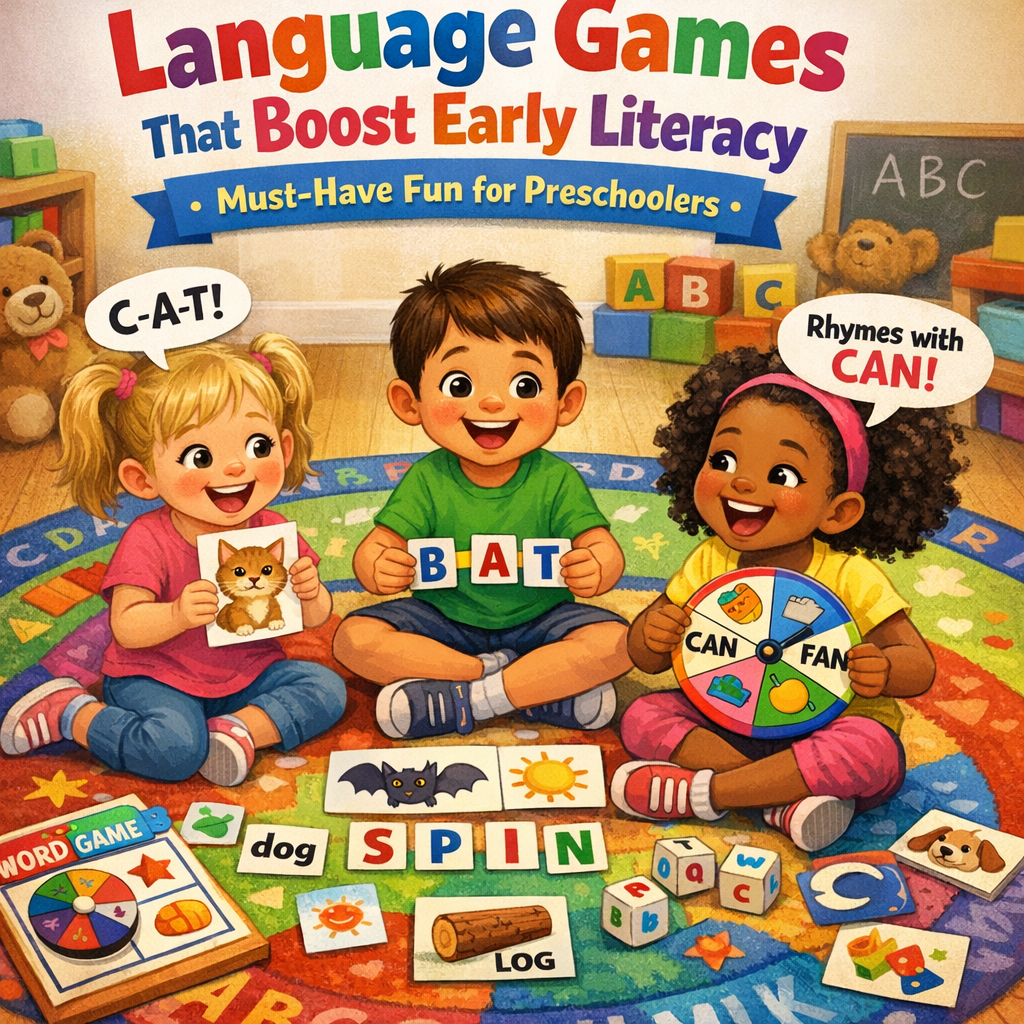
Early literacy is a critical component of a child’s development that lays the groundwork for future academic success. Children who master early literacy skills are more likely to excel in school, as they develop the ability to read fluently, understand complex texts, and communicate effectively.
Key Benefits of Early Literacy
– Cognitive Development: Encourages critical thinking and problem-solving skills.
– Language Mastery: Enhances vocabulary and language comprehension.
– Emotional Growth: Boosts confidence and self-expression.
Interactive Language Games to Enhance Literacy
Interactive language games make learning fun and keep children engaged. These games focus on developing a child’s ability to recognize letters, understand sounds, and eventually read and write independently.
1. Alphabet Treasure Hunt
Engage preschoolers in an alphabet treasure hunt to improve letter recognition and phonemic awareness. This game can be played indoors or outdoors and involves finding hidden objects starting with each letter of the alphabet.
– Objective: Improve letter recognition and phonetic skills.
– How to Play:
1. Hide objects beginning with various letters.
2. Provide a list of letters for the kids to find.
3. Encourage them to sound out the letters as they find each item.
2. Story Dice
Story dice is a creative game that enhances vocabulary and storytelling abilities. Using dice with various images, children can create unique stories, boosting their narrative skills.
– Objective: Foster creativity and language development.
– How to Play:
1. Roll dice with pictures.
2. Formulate a story based on the images rolled.
3. Encourage children to use descriptive language.
3. Rhyming Bingo
Rhyming Bingo helps children recognize rhyming words, which is crucial for phonemic awareness. This game is simple, engaging, and adaptable for group play.
– Objective: Enhance rhyming and phonics skills.
– How to Play:
1. Create bingo cards with images and words.
2. Call out words, and children mark those that rhyme with images on their cards.
3. The first to complete a row wins.
4. Word Ladder
Word Ladder challenges children to change one letter at a time to form new words, helping them understand word structure and spelling.
– Objective: Improve spelling and vocabulary.
– How to Play:
1. Begin with a simple word.
2. Children change a single letter to form a new word.
3. Continue until they can’t form new words.
5. Puppet Play
Puppet play encourages interactive storytelling and language use, perfect for enhancing verbal expression and comprehension.
– Objective: Promote oral language skills.
– How to Play:
1. Use puppets to act out stories or scenarios.
2. Encourage dialogue between children and puppets.
3. Adapt scenes to include new vocabulary.
Utilizing Technology for Language Games
Incorporating technology through educational apps can further enhance the language game experience. Interactive apps like the Brain Baba Kids Learning App offer a vast array of games focused on building early literacy skills.
Benefits of Digital Language Games
– Interactive Learning: Engages multiple senses for immersive learning.
– Consistent Feedback: Provides immediate responses to actions.
– Personalized Experience: Tailors difficulty levels to each child’s needs.
Strategies for Parents and Educators
To maximize the benefits of language games in promoting early literacy, parents and educators should adopt specific strategies.
Encourage Daily Practice
Consistency is key to development. Encourage children to engage in language games daily, integrating them into routine activities.
Create a Language-Rich Environment
Surround children with books, labels, and written language to reinforce learning. Incorporate games like Alphabet Treasure Hunt using household items.
Foster a Love for Reading
Instill a passion for reading by modeling reading behavior, sharing stories, and using games like Puppet Play to bring stories to life.
Balance Screen Time
While digital apps can be beneficial, balance technological games with traditional play to offer a well-rounded learning experience.
Addressing Common Challenges
Despite the plethora of benefits, some challenges might arise when using language games for early literacy.
Limited Resources
– Solution: Use everyday items to create homemade games like Story Dice or Rhyming Bingo.
Short Attention Spans
– Solution: Choose short, engaging games and frequently rotate activities to maintain interest.
Diverse Learning Paces
– Solution: Utilize adjustable difficulty levels in apps or modify games to suit individual needs.
FAQ Section
What are the best language games for preschoolers?
The best games accommodate diverse learning styles. Alphabet Treasure Hunt and Rhyming Bingo are highly effective because they integrate play with learning, making them enjoyable and educational.
How often should language games be played to see results?
Playing language games a few times a week can lead to noticeable improvements. Consistency, rather than duration, ensures steady progress in literacy skills.
Can technology really aid in early literacy?
Yes, technology offers interactive and engaging ways to learn. Apps like the Brain Baba Kids Learning App provide structured learning paths and can complement traditional methods.
How do I know if a language game is effective?
Effective language games will show tangible results in your child’s ability to recognize letters, understand sounds, and form words. Regular assessments and observations during play can help track progress.
Are language games suitable for all preschool age groups?
Language games are adaptable and can be tailored to suit various age groups and learning capabilities, ensuring that all children can benefit from them.
Conclusion
Language games are powerful tools to enhance early literacy among preschoolers. These interactive activities promote essential language skills while ensuring that learning remains fun and engaging. By consistently incorporating these games into daily routines, both parents and educators can help children build a strong literacy foundation. Explore more resources on our site to discover additional strategies for fostering early learning. Embrace the joy of learning today and set your child on the path to academic success.