Geography Projects That Spark World Learning: Must-Have Fun for Kids
Introducing children to the vast and fascinating world of geography can be both an engaging and educational experience. Geography projects offer a unique opportunity for kids to develop world learning skills while having fun. By exploring different cultures, landmarks, and natural wonders, children not only enhance their understanding of the planet but also foster a lifelong curiosity about the world around them.
In this comprehensive guide, we’ll delve into several engaging geography projects tailored for kids. These activities aim to fuel their creativity while expanding their knowledge about diverse regions and cultures.
Understanding the Importance of Geography for Kids
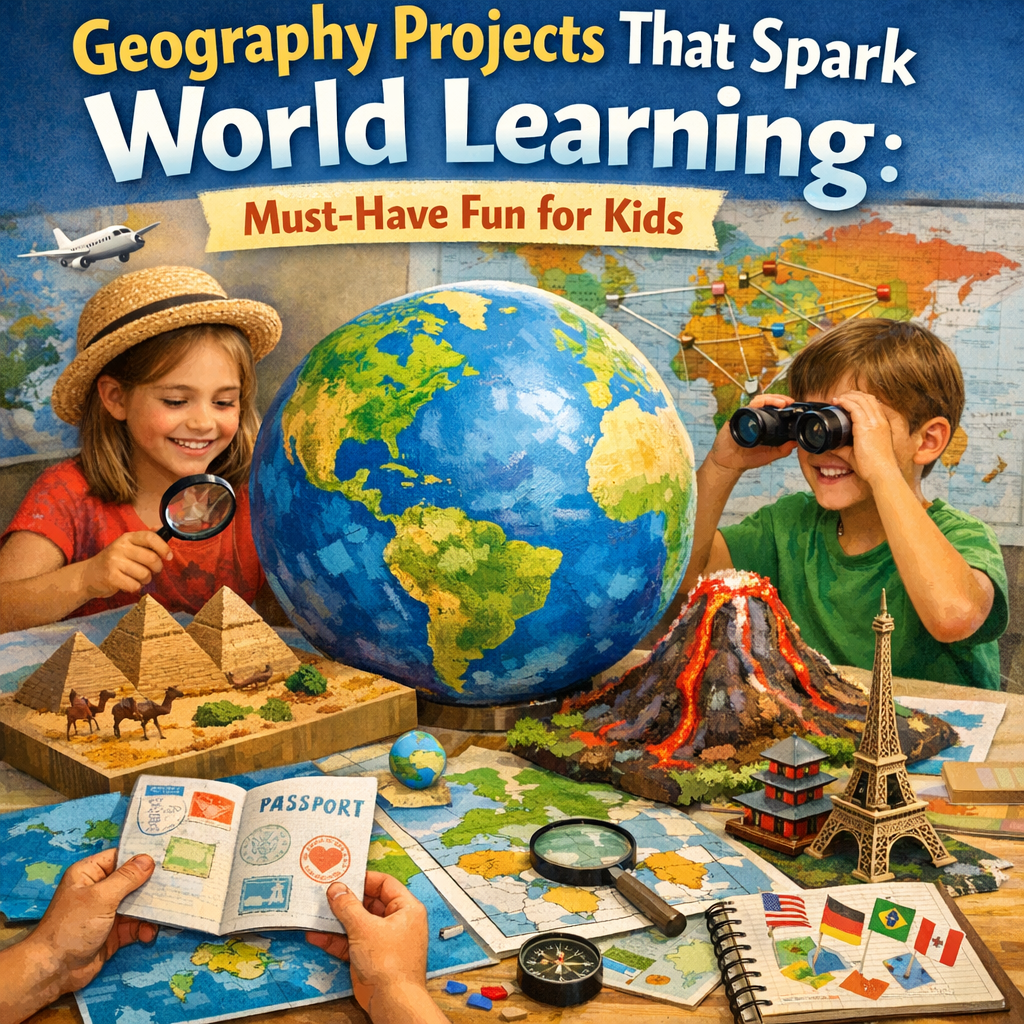
Understanding geography goes beyond memorizing the names of countries and capitals. Comprehensive geographical knowledge encourages critical thinking, cultural appreciation, and environmental awareness. Here are some key benefits:
– Cultural Awareness: Encouraging kids to learn about different cultures fosters empathy and global citizenship.
– Spatial Thinking: Geography helps develop spatial thinking skills, aiding in problem-solving and understanding geography-related concepts.
– Environmental Awareness: Knowledge of geographical processes helps kids appreciate natural resources and understand environmental challenges.
These foundational insights make incorporating geography projects into education crucial for holistic child development.
Engaging Geography Projects for Kids
Below, we’ve outlined several engaging geography projects that will inspire kids to explore and understand the world in new, exciting ways.
H2: Building a Continent Model
Objective: Create a 3D model of a continent to understand topographical features and geographical diversity.
Materials Needed:
– Cardboard or foam board
– Clay or dough
– Paints and brushes
– A map of the chosen continent
Steps:
1. Outline the Continent: Use a map to trace the outline of the continent onto the cardboard or foam board.
2. Create Elevations: Build mountains, valleys, and plains using clay or dough, referring to geographical maps for accuracy.
3. Add Features: Paint rivers, lakes, and forests. Label each topographical feature.
4. Research and Present: Have the child research the continent’s climate, flora, fauna, and notable landmarks.
Learning Points:
– Encourages understanding of physical geography
– Develops research and presentation skills
H2: Cultural Exposition: Festival Around the World
Objective: Explore global cultures by studying and presenting a festival celebrated in another country.
Materials Needed:
– Access to books or the internet
– Art supplies (for creating dioramas or posters)
– Presentation materials
Steps:
1. Choose a Festival: Select a festival, such as Diwali in India or Carnival in Brazil.
2. Research: Study the festival’s history, significance, and traditional practices.
3. Create a Presentation: Design a diorama or poster depicting the festival’s details.
4. Interactive Session: Conduct a mini-celebration or present findings to friends or family.
Learning Points:
– Promotes cultural understanding and respect
– Enhances public speaking and research abilities
H2: Mapping Our Neighborhood
Objective: Develop mapping skills by creating a detailed map of the local neighborhood.
Materials Needed:
– Graph paper or blank sheets
– Pencils and colored markers
– A compass (optional)
Steps:
1. Explore the Area: Walk around the neighborhood and list prominent landmarks.
2. Sketch the Map: Draw a rough layout of streets, parks, and important buildings.
3. Detailing: Add symbols and labels to mark different places.
4. Field Verification: Go back to verify map accuracy and adjust as necessary.
Learning Points:
– Teaches basic cartography and mapping skills
– Encourages appreciation for the local area
H2: Climate Zones and Weather Patterns
Objective: Understand global climate zones by creating a comparative weather chart.
Materials Needed:
– Access to weather data online or in books
– Chart paper
– Colored pencils
Steps:
1. Select Regions: Choose diverse regions from different climate zones (tropical, temperate, polar, etc.).
2. Collect Data: Record temperature, precipitation, and other weather patterns over a month.
3. Design a Chart: Create a comparative chart to visualize differences and similarities.
4. Discussion: Discuss how climate impacts lifestyle and economy in each region.
Learning Points:
– Enhances understanding of meteorology
– Links climate to social and economic aspects
H2: Country Discovery Adventure
Objective: Create a virtual travel brochure for a chosen country to explore history, culture, and geography.
Materials Needed:
– Computer or tablet with internet access
– Design software (optional)
– Printer (optional)
Steps:
1. Pick a Country: Select a country of interest.
2. Detailed Research: Explore cultural sites, historical landmarks, cuisine, and geography.
3. Design the Brochure: Use design tools to create an engaging travel brochure.
4. Share with Others: Present and distribute the brochure among peers or family.
Learning Points:
– Develops research and design skills
– Encourages appreciation of diverse cultures
H2: External Resource for Enhanced Learning
To further enhance geographical knowledge and world learning, consider using interactive tools. The Brain Baba Kids Learning App is a fantastic resource for children to engage with interactive lessons and quizzes.
Internal Resources to Explore
1. Understanding Cultural Diversity: Explore our article on fostering cultural appreciation in kids.
2. Learning with Maps: Discover our guide on teaching kids basic map skills.
3. Environmental Education: Check out how kids can learn about and participate in environmental conservation efforts.
Frequently Asked Questions
FAQ 1: How can parents make geography fun for children?
Parents can make geography fun by integrating games and hands-on projects into learning. Utilizing apps, interactive maps, and documentaries can also spark interest. Encouraging children to participate in geography-centered activities like treasure hunts or geocaching can engage them actively.
FAQ 2: What is the best age to start geography projects?
Children can start exploring geography around age 4-5 with basic concepts like continents and oceans. As they grow older, delve into more detailed aspects like cultural facts and physical geography. Tailor projects to be age-appropriate to keep them engaging and educational.
FAQ 3: Why is it important to learn about different cultures?
Learning about different cultures helps children develop empathy, respect, and a broader understanding of the world. It equips them with the skills needed to thrive in diverse environments and encourages open-mindedness and adaptability.
FAQ 4: How do geography projects benefit academic growth?
Geography projects enhance critical thinking, problem-solving, and research skills. They foster creativity and can improve understanding and retention by using interactive and hands-on methods, making academic learning enjoyable and impactful.
FAQ 5: Can technology aid in teaching geography?
Yes, technology plays a significant role in modern education. Apps like Brain Baba offer interactive lessons that make learning geography more engaging. Virtual reality tools and digital maps provide immersive experiences that are both informative and captivating.
Conclusion
Incorporating geography projects into children’s educational journeys paves the way for a deeper understanding of the world. These projects not only educate but also inspire curiosity and cultural appreciation. By following the outlined projects above and integrating resources like the Brain Baba Kids Learning App, parents and educators can make geography learning a thrilling adventure. Encourage your child to embark on these projects and explore the world from your own home. Start today and cultivate a global thinker for tomorrow!