Home STEM Projects: Must-Have Fun for Effortless Kids Engineering
In an age of rapid technological advancement, introducing kids to engineering at an early age holds paramount importance. Home STEM projects, which encompass science, technology, engineering, and mathematics, provide children with the tools and opportunities to put their curiosity into action. By diving into the world of kids engineering through engaging and practical activities, parents and educators can ignite a lifelong passion for discovery and problem-solving.
The Importance of Home STEM Projects
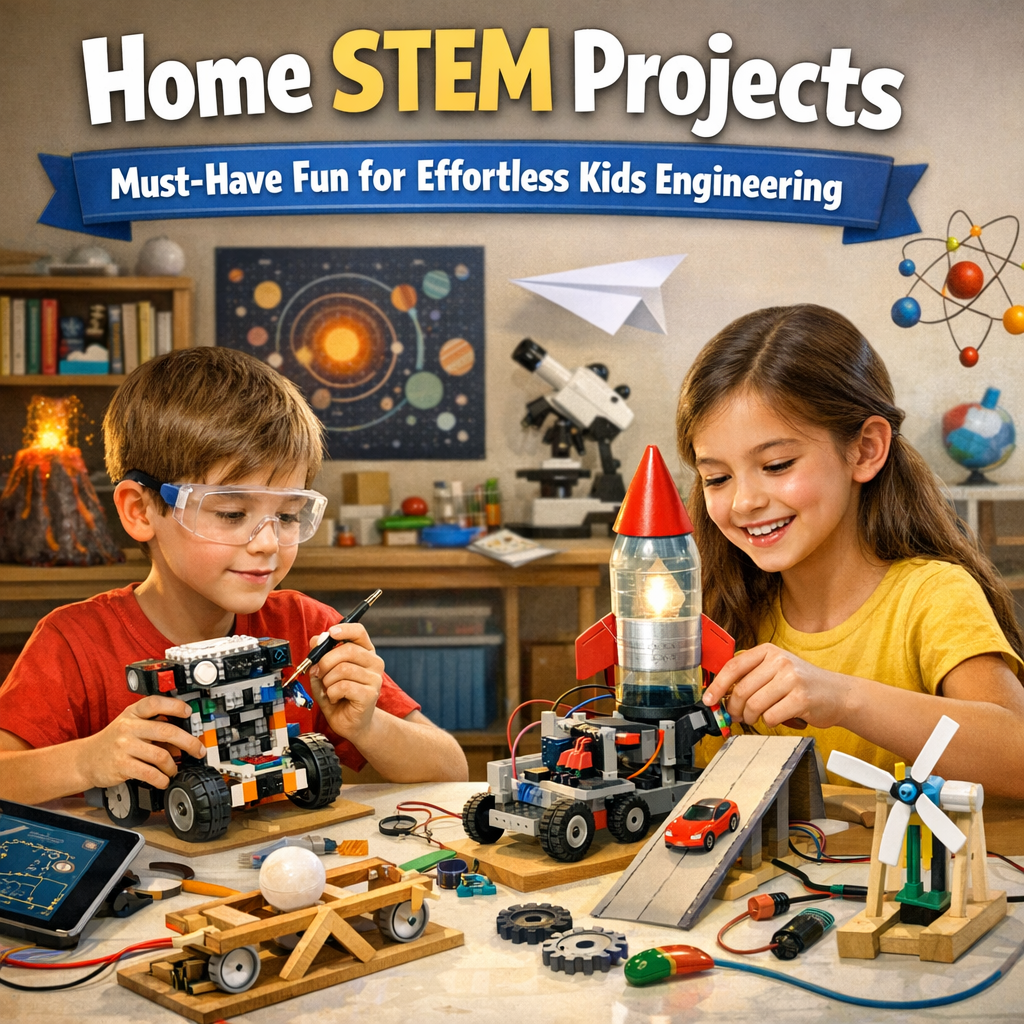
The realm of home STEM activities is not just about teaching kids concepts from textbooks. It’s about making learning tangible and fun. When children are exposed to engineering ideas through play and experimentation, they develop critical thinking, creativity, and perseverance.
Benefits of Early Engineering Education
1. Enhances Problem-Solving Skills: Engaging in projects that require troubleshooting or creative thinking boosts a child’s ability to confront challenges head-on.
2. Promotes Teamwork and Collaboration: Many STEM projects encourage children to work together, teaching them the importance of teamwork.
3. Fosters Creativity and Innovation: By allowing children the freedom to experiment, they learn to think outside the box.
4. Improves Academic Performance: Studies show that kids involved in STEM activities tend to perform better academically.
5. Prepares for Future Careers: Early exposure to engineering principles can spark an interest in STEM careers later in life.
For further exploration into STEM, consider trying interactive resources like the Brain Baba Kids Learning App, a tool designed to introduce foundational learning concepts through engaging activities.
Getting Started: Basic Home STEM Projects
Introducing STEM projects at home doesn’t require expensive kits or materials. Often, you can find what you need right around the house.
Simple Machines Scavenger Hunt
– Objective: Identify and understand the six simple machines: lever, wheel and axle, pulley, inclined plane, wedge, and screw.
– Materials: Everyday household items (scissors, bottle opener, toy cars, drawer pull).
– Instructions:
1. Create a list of the simple machines.
2. Have kids search for household items that use these machines.
3. Discuss how these machines make tasks easier.
– Benefits: Teaches the basics of physics and engineering while encouraging observational skills.
Construct a Homemade Catapult
– Objective: Explore the principles of tension and force.
– Materials: Popsicle sticks, rubber bands, plastic spoons, small marshmallows.
– Instructions:
1. Stack popsicle sticks and secure with rubber bands on each end.
2. Attach a plastic spoon to form a lever arm.
3. Use as a catapult to launch marshmallows.
– Benefits: Demonstrates the concepts of force and motion in a hands-on manner.
Advanced DIY Projects for Young Engineers
As children become more comfortable with basic concepts, they can transition to more advanced projects that demand a greater level of engagement and critical thinking.
Building a Hydraulic System
– Objective: Understand fluid mechanics and hydraulics.
– Materials: Syringes (without needles), tubing, cardboard, small plastic container.
– Instructions:
1. Connect syringes using tubing to imitate hydraulic systems.
2. Use water in the syringes to move a simple device (like a small drawbridge).
– Benefits: Offers an introduction to the principles of hydraulic machines used in real-world applications.
DIY Solar Oven
– Objective: Explore renewable energy and heat transfer.
– Materials: Cardboard box, aluminum foil, plastic wrap, tape.
– Instructions:
1. Line a box with foil and cover the opening with plastic wrap.
2. Position the box under direct sunlight to heat and cook simple foods.
– Benefits: Introduces solar energy potential with a focus on environmental sustainability.
Incorporating Technology with Home STEM
Technology is a vital component of the STEM umbrella, and incorporating it can open new pathways for exploration.
Coding with Kids: Creating a Simple Game
– Objective: Teach the basics of programming logic and design.
– Tools: Laptop or tablet with Scratch software.
– Instructions:
1. Create a basic game using Scratch, a visual programming language.
2. Encourage kids to experiment with different elements and outcomes.
– Benefits: Develops computational thinking and problem-solving skills while fostering creativity.
Robotics with Household Materials
– Objective: Understand basic robotics and electronics principles.
– Materials: Small motors, batteries, insulated wires, tape, bottle caps.
– Instructions:
1. Assemble a simple vibrating robot by attaching a motor to a base made from bottle caps.
2. Experiment by altering weight distribution for better movement.
– Benefits: Provides a foundation for understanding robotics, encouraging interest in electronics.
Linking STEM Concepts to Everyday Life
Bringing engineering concepts into everyday life reinforces learning and makes it relatable.
The Math Behind Baking
– Objective: Illustrate how mathematics plays a role in daily activities.
– Activities:
– Measure ingredients using different scales.
– Adjust recipes by calculating proportions.
– Benefits: Demonstrates real-world applications of math, making it tangible and practical.
Engineering in Nature: Explore the Outdoors
– Objective: Identify engineering principles in natural settings.
– Activities:
1. Examine beehives for structural engineering.
2. Study how birds build nests using specific techniques.
– Benefits: Promotes an appreciation for nature and highlights engineering as a natural phenomenon.
Creating a STEM-Friendly Environment at Home
Supporting STEM at home goes beyond projects; it’s about nurturing a conducive environment.
Building a Home Lab
– Space: Dedicate a corner for experiments and ongoing projects.
– Tools: Stock with basic science kits, tools, and reference books.
– Encouragement: Cultivate curiosity by encouraging questions and exploration.
Encouraging Continuous Learning
Fostering an ongoing interest in STEM is vital for long-term engagement.
– Resources:
– Offer subscriptions to science magazines aimed at young readers.
– Use educational apps and digital resources like the Brain Baba Kids Learning App to supplement learning.
Frequently Asked Questions
What age is appropriate for starting STEM education?
STEM education can start as early as preschool. Simple activities like counting or building with blocks lay a foundation for more complex concepts introduced later.
Are there any resources for parents to support STEM learning?
Yes, numerous resources are available. Websites with free project ideas, educational apps like the Brain Baba Kids Learning App, and community workshops are excellent places to start.
How can I make STEM activities engaging for my child?
Incorporate their interests into projects. If a child likes art, integrate design into engineering tasks. Keep activities hands-on and allow them to explore outcomes independently.
Can STEM projects be done without expensive equipment?
Absolutely. Many STEM projects use materials found at home. Creativity and resourcefulness are key. Simple household items can create compelling projects without substantial cost.
How do STEM activities support future career readiness?
STEM develops critical thinking, problem-solving, and collaborative skills—essential attributes in any career. Early exposure can also spark interest in pursuing specialized STEM fields.
Conclusion
Empowering children with the tools and mindset to tackle challenges gives them a generous head start in life. Home STEM projects provide an invaluable platform to nurture budding engineers in engaging and meaningful ways. By integrating these activities with your parenting or educational approach, you’re supporting the next wave of innovators and thinkers. Encourage exploration, embrace curiosity, and make learning an exciting journey for your child. Begin today, and experience the magical transformation as your child discovers the vast world of STEM.
For more resources on enhancing your child’s learning journey, consider downloading interactive educational tools like the Brain Baba Kids Learning App. Let the adventure in kids engineering begin!