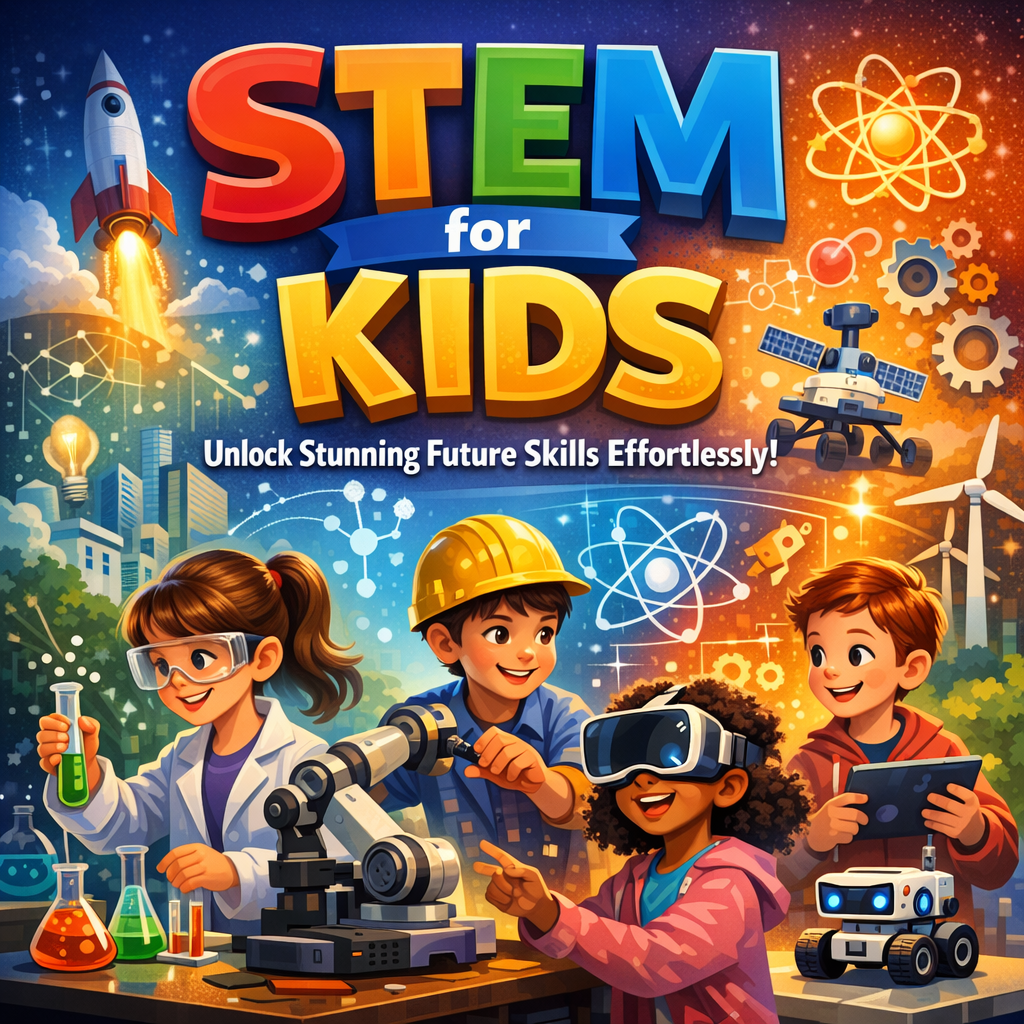
STEM for Kids: Unlock Stunning Future Skills Effortlessly
In today’s fast-paced digital age, preparing children for the future is more important than ever. Education systems worldwide are adapting to emphasize the importance of science, technology, engineering, and mathematics (STEM) education. “STEM for kids” is not just a buzzword—it’s a crucial foundation for developing future skills effortlessly. This comprehensive guide delves into the myriad benefits of STEM education for children and how it can prepare them for the challenges of tomorrow.
H2: Understanding STEM Education
H3: What is STEM?
STEM stands for Science, Technology, Engineering, and Mathematics. It’s an interdisciplinary approach that merges these fields into a cohesive learning paradigm based on real-world applications. STEM for kids is about more than just rote memorization; it’s about creating problem solvers and innovative thinkers.
H3: Why is STEM Important for Kids?
STEM education fosters critical thinking, creativity, and innovation—all skills necessary for success in the 21st century. The modern workforce demands these capabilities, and by introducing STEM concepts early, we prepare children to meet these demands seamlessly.
H3: The Role of STEM in Future Skills
Incorporating STEM into your child’s education can unlock stunning future skills, including:
– Analytical thinking
– Problem-solving abilities
– Technological literacy
– Creativity and innovation
These skills provide a significant competitive advantage in virtually any career, making STEM education a pivotal element of early learning.
H2: How to Introduce STEM to Young Learners
H3: Start with Everyday Experiences
STEM for kids doesn’t require specialized equipment or complex classes. Parents can start with everyday experiences, using simple activities to explain scientific concepts. For instance:
– Cooking: Introduce measurements and chemical reactions.
– Gardening: Discuss biology, plant life cycles, and environmental science.
– Building blocks: Teach basic engineering and geometry concepts.
H3: Leverage Educational Resources
Many platforms provide excellent resources for STEM education. Websites, online courses, and interactive apps offer engaging materials designed to cultivate interest in science and technology. For example, the Brain Baba Kids Learning App offers a variety of interactive games and activities to stimulate young minds.
H3: Encourage DIY Projects
Hands-on projects are a brilliant way to enforce STEM principles. Encourage your kids to take on DIY projects that require planning, hypothesizing, testing, and evaluating. This could include building a simple robot or creating a homemade volcano.
H2: Integrating Technology in Learning
H3: Use of Educational Apps and Tools
Technological tools can provide significant advantages in teaching STEM concepts. Apps and online platforms offer innovative ways for children to learn complex ideas intuitively. Explore the Brain Baba Kids Learning App for a tool that effectively blends education with entertainment.
H3: Robotics and Coding for Children
Robotics and coding are integral parts of a comprehensive STEM education. Introducing children to robotics kits or simple coding platforms like Scratch can ignite their interest and foster essential skills such as logical thinking and creativity.
H3: Virtual and Augmented Reality
Virtual and Augmented Reality (VR/AR) transform how kids perceive STEM subjects. These technologies offer immersive experiences, such as virtual lab experiments or 3D models of planets, making learning both fun and impactful.
H2: The Role of Schools in Promoting STEM Education
H3: Curriculum Development
Schools play a pivotal role in shaping young minds. By integrating STEM subjects into their curricula, schools can provide structured opportunities for students to engage in complex problem-solving and innovative thinking.
H3: Extracurricular Activities and Clubs
Participants in STEM clubs and competitions often develop a deeper understanding of scientific principles. Schools should promote these activities to engage students beyond the classroom and encourage exploration in various STEM fields.
H3: Collaboration with Industry Experts
Partnerships between schools and industry leaders can provide valuable insights and experiences for students. Through mentorship programs or sponsored innovation challenges, students can experience real-world applications of their learning.
H2: Overcoming Challenges in STEM Education
H3: Breaking Gender Stereotypes
Women are underrepresented in many STEM fields, making it imperative to break down gender stereotypes from an early age. Encouraging girls to pursue STEM subjects by providing role models and inclusive resources can make a significant difference.
H3: Addressing Accessibility Issues
STEM education should be accessible to all children, regardless of their backgrounds. Community-driven initiatives and non-profit organizations can bridge the gap by providing resources and support to underprivileged communities.
H3: Continuous Professional Development for Educators
Teachers need regular training to stay updated on the latest STEM education trends and technologies. Workshops, seminars, and certifications can help educators effectively impart STEM concepts.
H2: Frequently Asked Questions About STEM for Kids
H3: What age should children start learning STEM?
It’s never too early to introduce basic STEM concepts. Even preschool activities that encourage curiosity, exploration, and hands-on participation can lay the groundwork for later learning.
H3: How can I support STEM learning at home?
Parents can support STEM learning by integrating simple science experiments, educational games, and technology into daily routines. Encouraging questions and exploration is key to maintaining a child’s natural curiosity.
H3: What careers can STEM education lead to?
A STEM education can lead to countless career paths, including engineering, computer science, biology, environmental science, and more. It provides a strong foundation for innovation and problem-solving in any field.
H3: How do I know if my child is interested in STEM?
Look for signs of curiosity and interest in science and technology-related topics. If your child enjoys building, experimenting, or asking questions about how things work, they may have a natural inclination towards STEM.
H3: What resources are available for STEM education?
Numerous resources are available, from online courses and educational apps to local museum exhibitions and community workshops. The key is finding the materials that resonate with your child’s interests and learning style.
H2: Conclusion
STEM education is vital for cultivating the future skills our children will need to thrive in an ever-evolving world. By embracing STEM for kids, parents and educators can provide them with the tools and opportunities to succeed. Whether through hands-on projects, technology, or creative exploration, unlocking a child’s potential is just the beginning.
Take action today by exploring educational resources, integrating STEM activities into your routine, and inspiring future innovators. For a fun and interactive way to kickstart your child’s learning journey, download the app for kids from Brain Baba Kids Learning App.
Engage in this transformative approach and watch as your child unlocks stunning future skills effortlessly, ready to tackle the challenges of tomorrow with confidence and creativity.