Music Movement in Early Education: Unlock Stunning Benefits Today
Incorporating music movement into early education can remarkably enhance a child’s development across various domains. By engaging children in music and movement activities, educators and parents unlock unique benefits that support cognitive, emotional, and physical growth. In this comprehensive guide, we’ll explore how music movement activities stimulate young minds and offer actionable strategies to implement them effectively.
What is Music Movement?
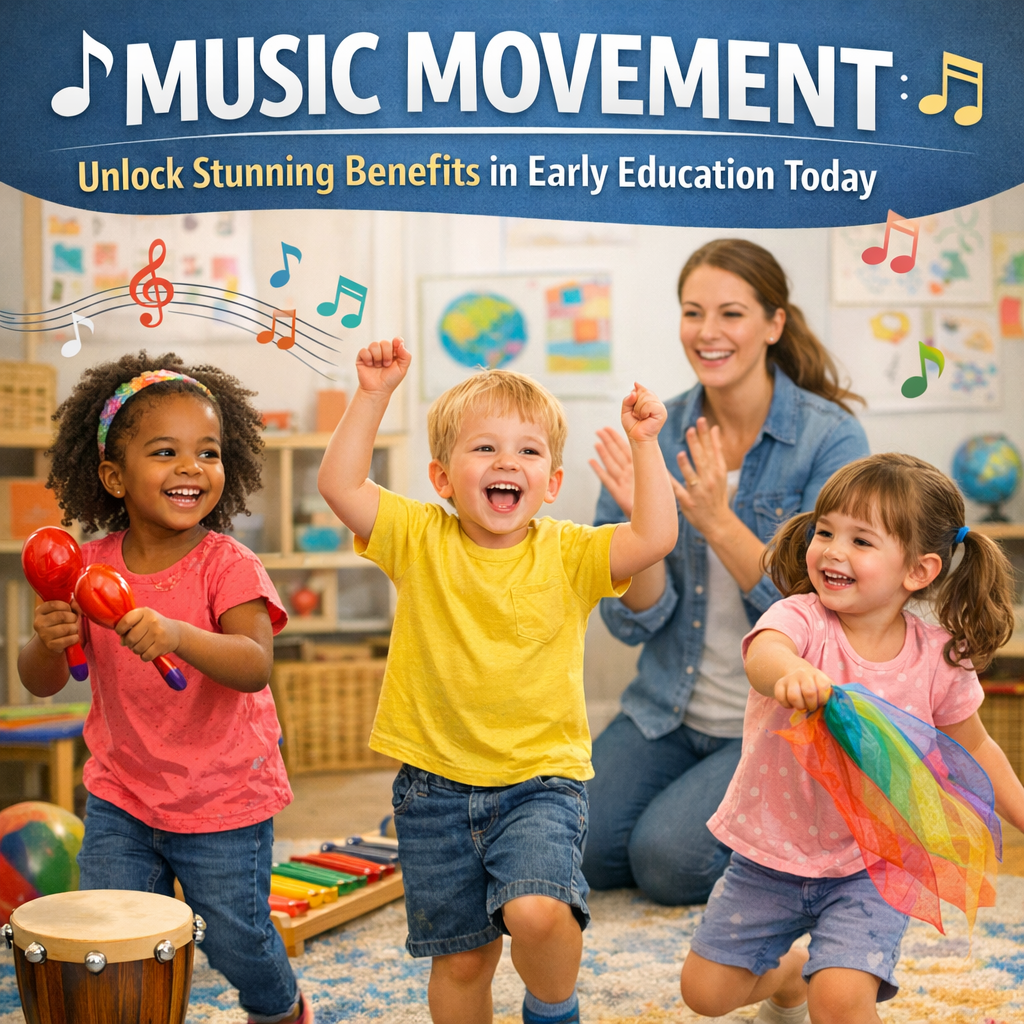
Music movement encompasses activities that combine rhythmic sounds with bodily motions, facilitating an immersive learning experience for children. These activities can range from simple hand clapping and foot tapping to complex dance routines set to music. Integrating music with movement offers a dynamic way to teach fundamental skills in an engaging manner.
The Cognitive Benefits of Music Movement
Enhancing Memory and Concentration
Music movement activities stimulate brain areas responsible for memory and concentration. When children engage in music and movement:
– They experience increased neural connectivity, particularly in brain regions associated with memory and attention.
– Repetitive rhythms and patterns in music help strengthen memory retention.
– Participating in activities like clapping or dance routines in sync with music promotes focus and concentration.
Encouraging Language Development
Language skills develop more rapidly when children are exposed to music and movement:
– Songs with repetitive lyrics and rhythms help improve articulation and vocabulary.
– Musical activities introduce new words through fun, memorable melodies, facilitating faster language acquisition.
– Rhythmic clapping and singing can enhance phonemic awareness, a key precursor to reading.
Music Movement for Emotional Growth
Building Emotional Intelligence
Music movement facilitates emotional expression, helping children understand and regulate their emotions:
– Dancing or moving to music can lift moods and provide emotional release.
– Emotional themes in songs can teach children about empathy and understanding.
– Group activities foster a sense of belonging and improve social skills.
Encouraging Creativity and Self-Expression
Through music movement, children learn to express themselves creatively:
– Dance allows children to explore and communicate their emotions physically.
– Musical improvisation on instruments can unlock creative potential.
– Creating dance routines or choreographed steps nurtures imaginative thinking.
Physical Development Through Music Movement
Improving Motor Skills
Music movement activities are crucial for refining gross and fine motor skills:
– Dancing or mimicking dance moves improve coordination and balance.
– Clapping, tapping, and playing simple musical instruments enhance dexterity.
– Rhythm-based activities help develop a child’s sense of timing and motor control.
Promoting Physical Health and Well-Being
Engaging children in music movement has significant health benefits:
– Physical activities such as dance improve cardiovascular fitness and muscle strength.
– Participation in musical games encourages an active lifestyle, combating sedentary behavior.
– Movement-based music activities like jumping or skipping promote overall physical development and stamina.
How to Incorporate Music Movement in Early Education
Designing Age-Appropriate Activities
When designing music movement activities, it’s important to consider age-appropriateness:
– For toddlers, use simple rhythms and actions like clapping and bouncing.
– Preschoolers can handle more structured activities such as choreographed dances or rhythm games.
– Adjust complexity based on the child’s developmental stage and interest.
Integrating Music into Daily Routines
Music movement can seamlessly blend into everyday activities:
– Start the day with a morning song and movement routine to energize students.
– Use music to transition between tasks, signaling the end of one activity and the beginning of another.
– Embed music into storytime with songs related to the book’s themes.
Utilizing Technology for Music Movement
Leverage educational technology to enhance music movement activities:
– Use apps like the Brain Baba Kids Learning App to introduce interactive musical games.
– Incorporate video platforms to stream dance tutorials and music-focused lessons.
– Explore online resources for new music and movement ideas that align with your educational goals.
Collaborative Music Movement Activities
Group Singing Circles
Create a sense of community and teamwork through group singing:
– Encourage students to take turns as a song leader, enhancing leadership skills.
– Incorporate songs that require group actions to foster cooperation.
Dance and Storytelling
Combine storytelling with dance to enhance educational experiences:
– Narrate stories with accompanying music, prompting children to act out parts through movement.
– Use costumes and props to bring stories to life, enriching imaginative play.
Partner and Group Games
Structured partner and group activities can enhance social interaction:
– Pair children for rhythm or dance partner activities to improve their teamwork and communication.
– Organize larger group games like musical chairs that incorporate movement and music.
Overcoming Challenges in Implementing Music Movement
Addressing Reluctance and Shyness
Some children may be reluctant to participate due to shyness:
– Offer encouragement and create a supportive environment.
– Begin with low-pressure, simple movements and gradually increase complexity.
– Highlight individual contributions to build confidence.
Aligning Curriculum and Goals
Ensure that music movement activities align with educational objectives:
– Plan music activities that reinforce learning themes or concepts from other subjects.
– Collaborate with teachers across disciplines to integrate music movement into a holistic curriculum.
Frequently Asked Questions
Why is music movement important in early education?
Music movement is pivotal in early education because it supports holistic child development—enhancing cognitive, emotional, physical, and social skills. Moreover, it keeps learning engaging and enjoyable for young children.
How frequently should music movement activities be included in the schedule?
Ideally, music movement should be a daily part of a child’s routine. Short, frequent sessions are more beneficial than long, infrequent ones, keeping energy levels high and attention focused.
Can children with special needs benefit from music movement?
Absolutely. Music movement activities can be adapted for children with special needs, providing sensory stimulation and support for motor skills and emotional expression in an inclusive environment.
What are some easy music movement activities to start with?
Basic activities like clapping to the beat, marching in place, playing percussion instruments, or simple hand movements to nursery rhymes are excellent starting points.
How do I measure the success of music movement programs?
Success can be gauged through observable improvements in engagement levels, social interactions, motor skills, and feedback from children and parents about their enjoyment and learning progress.
Conclusion
Incorporating music movement within early education frameworks provides an exciting, vital avenue for fostering comprehensive child development. By engaging in music and movement, educators and parents help children build essential skills, laying a robust foundation for lifelong learning and well-being. Embrace the rhythm and start implementing music movement activities today to unlock these stunning benefits!
For more information on crafting an engaging educational environment, be sure to explore our articles on [holistic child development], [using technology in education], and [creative storytelling techniques]. Let music movement enrich your educational journey, and witness its transformational impact.