History for Kids: Must-Have Fun Storytelling Activities They’ll Love
Introducing history to kids can be a challenging yet rewarding endeavor. “History for kids” does not have to be a series of dates and facts; it can become an enchanting storytelling adventure that captivates young minds. In this comprehensive guide, we will explore various fun storytelling activities that bring history to life, making it an exciting journey filled with discovery and learning.
Why Storytelling is Essential in Teaching History to Kids
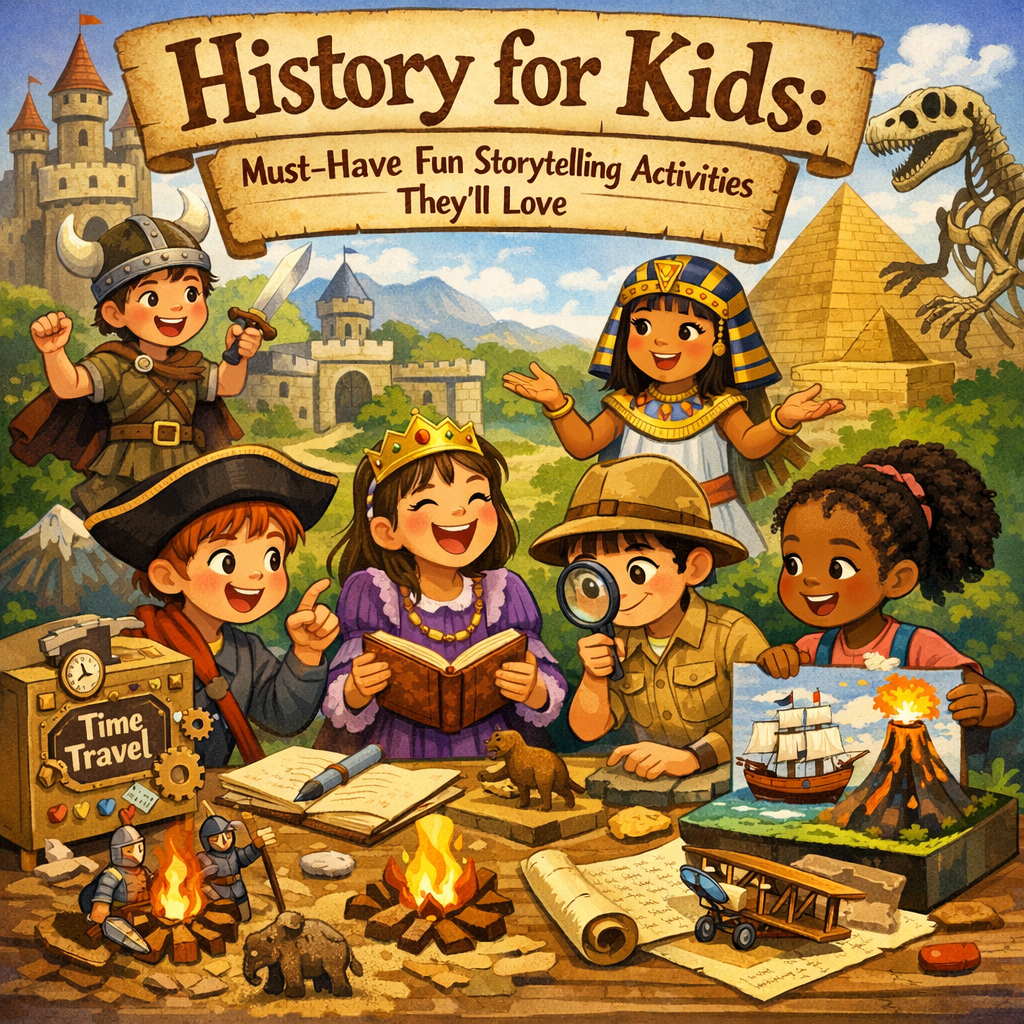
Storytelling is a powerful tool in education, especially when it comes to teaching history. When students are engaged in a story, they are more likely to remember and understand the context behind historical events. Storytelling helps to:
– Capture attention through relatable narratives.
– Enhance memory retention by embedding facts within a narrative structure.
– Encourage critical thinking as kids connect events and outcomes.
– Foster empathy by helping children understand diverse perspectives.
By making history relatable and fun, we can inspire a lifelong interest in the past.
Interactive Storytelling Techniques
1. Time-Travel Adventures
Creating time-travel scenarios can be a thrilling way for kids to explore different historical periods. In these adventures, children imagine they are traveling back in time to witness historical events firsthand.
– Build a Time Machine: Use cardboard and other craft supplies to build a “time machine” in the classroom or at home.
– Destination Selection: Allow kids to choose a historical period they would like to visit. This choice empowers them and piques their curiosity.
– Role-Playing: Children can take on roles as historical figures or ordinary people of that time, experiencing the daily life, challenges, and triumphs of the era.
2. Historical Character Journals
Encourage children to write journals as if they were someone living in a particular historical period. This activity allows them to dive deeper into the social and cultural aspects of the time.
– Character Creation: Help kids design their historical character, considering aspects such as age, occupation, and social status.
– Journal Prompts: Provide prompts that encourage reflection on historical events, daily routines, and interactions with other characters.
– Sharing Stories: Let kids share their journal entries with classmates to promote discussion and insight.
3. Digital Storytelling Projects
Incorporating technology can enhance engagement and creativity in history storytelling activities.
– Creating Digital Comics: Use apps and software that allow children to design digital comics illustrating historical events. This is a great way to blend visual arts with storytelling.
– Multimedia Presentations: Encourage students to create videos or slideshows that combine images, audio, and text to tell a historical story.
– Interactive Timelines: Tools like timeline creators enable kids to visualize historical events and understand chronology better.
Bringing History to Life with Drama and Arts
4. Historical Skits and Plays
Performing plays based on historical events helps children develop a deeper understanding of the context and significance of the events.
– Research and Write Scripts: Students can research historical events and write scripts, encouraging teamwork and learning.
– Costume Design: Use crafting sessions to create costumes, which adds a tactile element to the learning process.
– Performance: Hosting a performance day invites parents and classmates to see the culmination of students’ hard work, fostering confidence and community.
5. Art Projects Depicting Historical Themes
Art can be a powerful medium to express historical stories and themes.
– Murals and Posters: Collaborate on large art pieces that depict significant historical milestones or cultures.
– Historical Dioramas: Use shoeboxes to craft dioramas representing historical events or habitats.
– Art Exhibits: Organize an art exhibit where students can present and discuss their historical artwork.
Engaging with Family History
6. Ancestry Projects
Exploring personal family history can make history more relevant and personal for children.
– Family Tree Exploration: Help children create a family tree using online genealogy tools.
– Interview Family Members: Encourage kids to interview older family members to gather stories and insights from the past.
– Presentations: Students can compile their findings into presentations to share with their class, connecting personal history with broader historical events.
7. Local History Exploration
Encourage children to learn about the history of their local community.
– Historical Site Visits: Plan trips to local museums, historical landmarks, or heritage sites.
– Community Interviews: Kids can conduct interviews with long-time residents to gather oral histories and anecdotes.
– Community Maps: Create maps that include historical points of interest, enriching local history knowledge.
Utilizing Technology for Historical Storytelling
8. Educational Apps and Resources
Leverage digital tools like educational apps to enhance history learning.
– Brain Baba Kids Learning App: Consider using apps designed for kids to make history fun and interactive. You can download the app for kids to access various historical stories and games.
– Virtual Reality Tours: Platforms offering VR tours of historical sites provide immersive experiences that excite and engage young learners.
– Online Quizzes and Games: Interactive games and quizzes can reinforce historical facts in a playful format.
9. Podcasts and Audiobooks
Incorporate listening activities to diversify learning styles.
– History Podcasts for Kids: Find age-appropriate podcasts that present history in an engaging narrative style.
– Audiobook Series: Offer historical fiction audiobooks where kids can hear stories while engaging their imagination.
Frequently Asked Questions
How can I make history interesting for kids?
Incorporate storytelling, drama, and hands-on activities to make history engaging for kids. Use historical events as stories to stimulate their imagination.
Why is storytelling important in teaching history?
Storytelling brings historical events and figures to life, helps with memory retention, and encourages empathy and critical thinking among kids.
What are some fun ways to teach history to kids?
Use interactive activities like time-travel adventures, digital storytelling projects, and drama to make learning history fun and immersive.
How can I incorporate local history into learning?
Visit local museums and historical sites, create community maps, and encourage interviews with community elders to connect kids with their local heritage.
How do educational apps help in learning history?
Educational apps offer interactive content, such as games and stories, making history accessible and enjoyable for kids. Apps like the Brain Baba Kids Learning App offer curated content suitable for young learners.
Conclusion
Engaging children in history through storytelling activities is a transformative process that helps young learners view the past as a source of adventure and exploration. By integrating creative storytelling techniques, technology, and interactive experiences, we make history a subject that inspires curiosity and passion. Encourage kids to embark on their historical journey today, where they can experience the past like never before, and understand its profound impact on the present and future. Explore our resources for educators and family history activities to find more ways to bring history to life for young learners. Dive into the fascinating world of history and enrich your child’s learning experience!