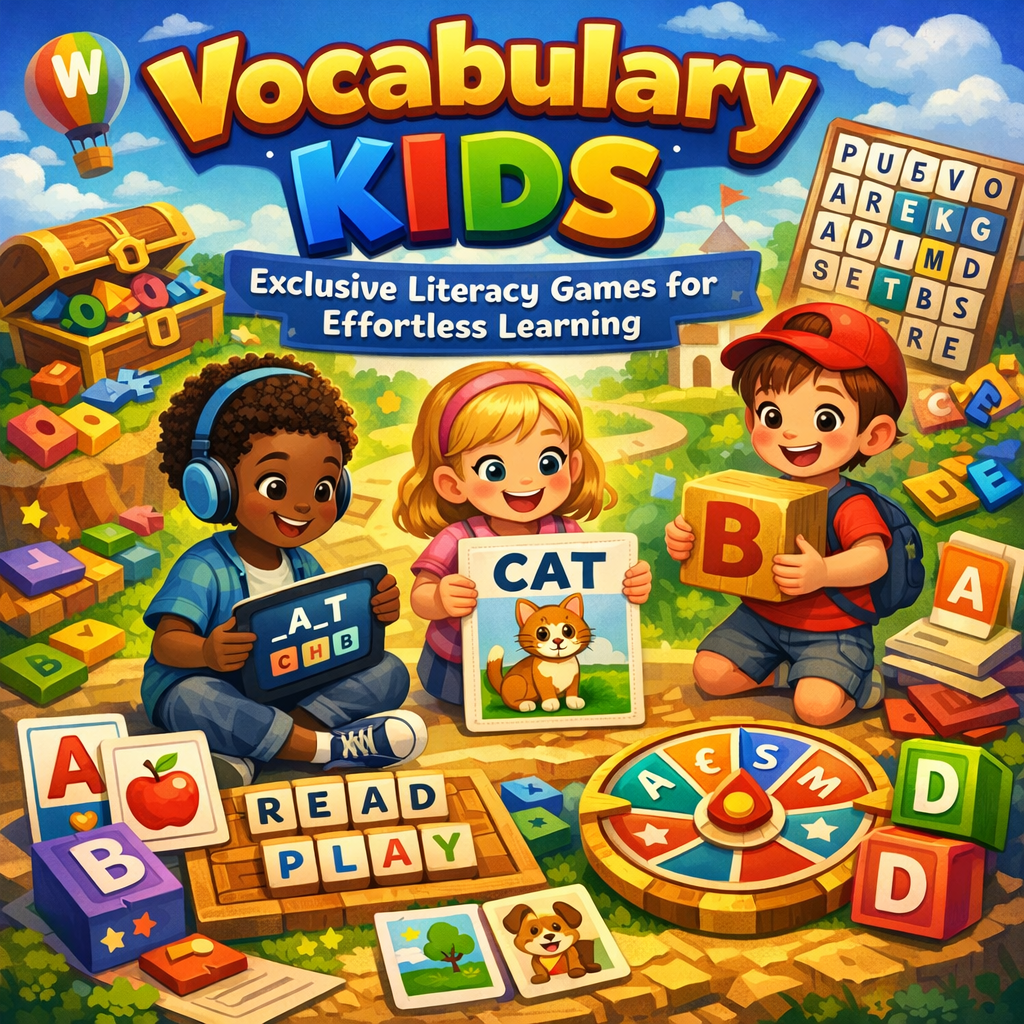
Vocabulary Kids: Exclusive Literacy Games for Effortless Learning
Literacy is a critical skill that lays the foundation for a child’s future success. The earlier children start developing their vocabulary, the better equipped they are for academic achievements and confident communication. In this comprehensive guide, we explore “vocabulary kids” through exclusive literacy games designed for effortless learning. These innovative games engage children, making vocabulary building enjoyable and effective.
The Importance of Vocabulary Building for Children
Early Literacy Development
The journey of literacy begins at a young age, and vocabulary plays a pivotal role in this process. Building a robust vocabulary not only enhances communication skills but also supports cognitive development. Here’s how vocabulary kids can benefit from literacy games:
– Improved Reading Comprehension: A rich vocabulary helps children understand what they read, leading to better academic performance.
– Enhanced Writing Skills: Knowing a variety of words allows children to express themselves more clearly and creatively.
– Social Interaction: Vocabulary enables effective communication, helping children build relationships and interact socially.
– Critical Thinking: Understanding diverse words enriches problem-solving and critical thinking abilities.
Role of Literacy Games
Games are powerful tools in education, turning learning into an engaging activity. Literacy games specifically aimed at vocabulary kids serve multiple purposes:
– Motivate reluctant learners by making vocabulary exercises fun and interactive.
– Provide a hands-on approach to word learning, integrating play with education.
– Adapt to different learning styles, accommodating visual, auditory, and kinesthetic learners.
Explore the Brain Baba Kids Learning App to find a variety of interactive games and activities designed specifically for vocabulary enrichment.
Types of Literacy Games for Vocabulary Enhancement
Word-Based Board Games
Board games are classic tools in vocabulary development, offering both entertainment and educational value.
– Scrabble Junior: An adaptation of the original, this game introduces children to spelling and word formation.
– Boggle: Helps kids recognize patterns and improve spelling skills as they form words from random letter combinations.
Digital Literacy Apps
In today’s tech-savvy age, digital apps are an excellent medium for vocabulary kids. They provide interactive platforms with educational games designed to reinforce vocabulary effortlessly.
– Wordscapes: Combines crosswords and word searches, challenging kids to expand their vocabulary while solving puzzles.
– Endless Alphabet: A playful app that introduces new words through animated puzzles and fun interactions.
Story-Based Games
Storytelling is a natural way to enhance vocabulary as it immerses children in contexts where words come alive.
– Mad Libs: This game involves filling in blanks in stories with random words, creating humorous narratives while teaching parts of speech.
– Story Cubes: Encourage kids to use imagination and vocabulary by crafting stories based on rolled dice illustrations.
Implementing Literacy Games in Educational Settings
Classroom Strategies
Teachers can incorporate vocabulary games into their lesson plans to create an interactive learning environment.
– Group Activities: Engage students in team-based word games like charades or Pictionary with vocabulary terms.
– Weekly Challenges: Introduce a “word of the week” and reward students for using it in sentences or finding synonyms.
Home Learning Techniques
Parents play a crucial role in reinforcing vocabulary at home through literacy games.
– Daily Vocabulary Challenges: Encourage children to learn a new word each day and use it in conversations.
– Reading Together: Choose books appropriate for vocabulary kids, pausing to explain new words and their meanings.
For additional resources and activities, explore related content on nurturing literacy skills in children effectively.
Benefits of Using Games for Vocabulary Building
Engaging Learning Experience
Games offer an engaging platform that captures children’s interest, making vocabulary acquisition a more enjoyable task.
– They transform learning into an adventure rather than a chore.
– Interactive elements, such as scoring points and leveling up, motivate kids to continue learning.
Varied Learning Modalities
Games cater to different learning preferences, ensuring that each child can benefit regardless of their dominant learning style.
– Visual Learners: Benefit from colorful graphics and animated word interactions.
– Auditory Learners: Gain from listening to pronunciation and sounds in games.
– Kinesthetic Learners: Engage through tactile activities like sorting and matching.
Accessibility and Convenience
With digital literacy games, learning is accessible anywhere, providing options for parents and educators to integrate vocabulary practice seamlessly into daily schedules.
Choosing the Right Games for Vocabulary Kids
Age Appropriateness
Select games that match the cognitive and language development levels of your child.
– Preschoolers: Focus on games that introduce basic words and phonics.
– Elementary School: Choose games with more complex words and sentence structure.
Educational Value
Ensure games are designed with educational goals in mind, emphasizing vocabulary development rather than mere entertainment.
– Look for games that provide explanations of words in context.
– Prioritize those that adapt to a child’s progress and expand their vocabulary.
Reviews and Recommendations
Research games with positive reviews from other parents, educators, and experts in childhood education. Community feedback often highlights valuable insights and potential limitations of a game.
Integrating Technology with Traditional Learning
Combining technology with traditional vocabulary-building methods ensures a well-rounded approach to literacy.
Traditional Techniques
Maintain a balance by incorporating tried-and-tested methods:
– Flashcards: Simple yet effective for practicing word recognition and meanings.
– Reading Aloud: Stimulates auditory learning and improves pronunciation.
Technology’s Role
Technology enhances traditional learning, offering innovative, interactive educational experiences:
– Adaptive Learning: Apps adjust to each child’s learning pace and provide personalized challenges.
– Instant Feedback: Technological tools give immediate corrections, helping children learn from mistakes instantly.
For a comprehensive selection of educational games, consider downloading the Brain Baba Kids Learning App for an interactive and enriching experience.
Frequently Asked Questions
What is the best way to introduce vocabulary to young children?
Introduce vocabulary naturally through daily interactions and conversations. Utilize engaging literacy games and storytelling to make learning seamless and enjoyable.
How can I assess my child’s vocabulary development?
Regularly engaging with your child through educational games, reading sessions, and discussions can give insights into their vocabulary progress. Notice their ability to understand and use new words in context.
Are digital literacy games effective for vocabulary building?
Yes, digital literacy games are highly effective. They provide interactive and adaptive learning experiences that cater to different learning styles, keeping children motivated and engaged.
How often should my child play vocabulary games?
Integrate vocabulary games into your routine regularly, but ensure a balance with other educational activities. Consistent, daily interaction with vocabulary games can significantly enhance a child’s word bank.
Can vocabulary games help with language acquisition for non-native speakers?
Absolutely. Literacy games offer a fun, stress-free environment for non-native speakers to practice new words, understand meanings, and improve language skills.
Conclusion
In the quest to empower vocabulary kids, literacy games play a crucial role by making learning an enjoyable journey. As parents and educators, selecting the right games and strategies can foster significant improvement in a child’s vocabulary. Explore resources like the Brain Baba Kids Learning App for a wealth of educational games designed to enhance literacy skills. Start incorporating these engaging activities today and witness the effortless learning process unfold.
Call to Action: Dive into the world of vocabulary games, and help your child achieve literacy greatness! Visit our resources for more tips on nurturing your child’s language skills.