Eco-Friendly Kids: Must-Have Nature Crafts for Effortless Fun
Introducing eco-friendly kids to nature crafts is a rewarding way to inspire creativity and environmental stewardship. In today’s world, where sustainable living is becoming increasingly crucial, engaging children in activities that promote environmental awareness is vital. Through nature crafts, kids can explore their creativity while learning about the environment in a hands-on, enjoyable manner. This article delves into a variety of nature crafts that are both easy and fun, providing comprehensive insight into how parents and educators can encourage eco-friendly creativity.
Why Nature Crafts Matter for Eco-Friendly Kids
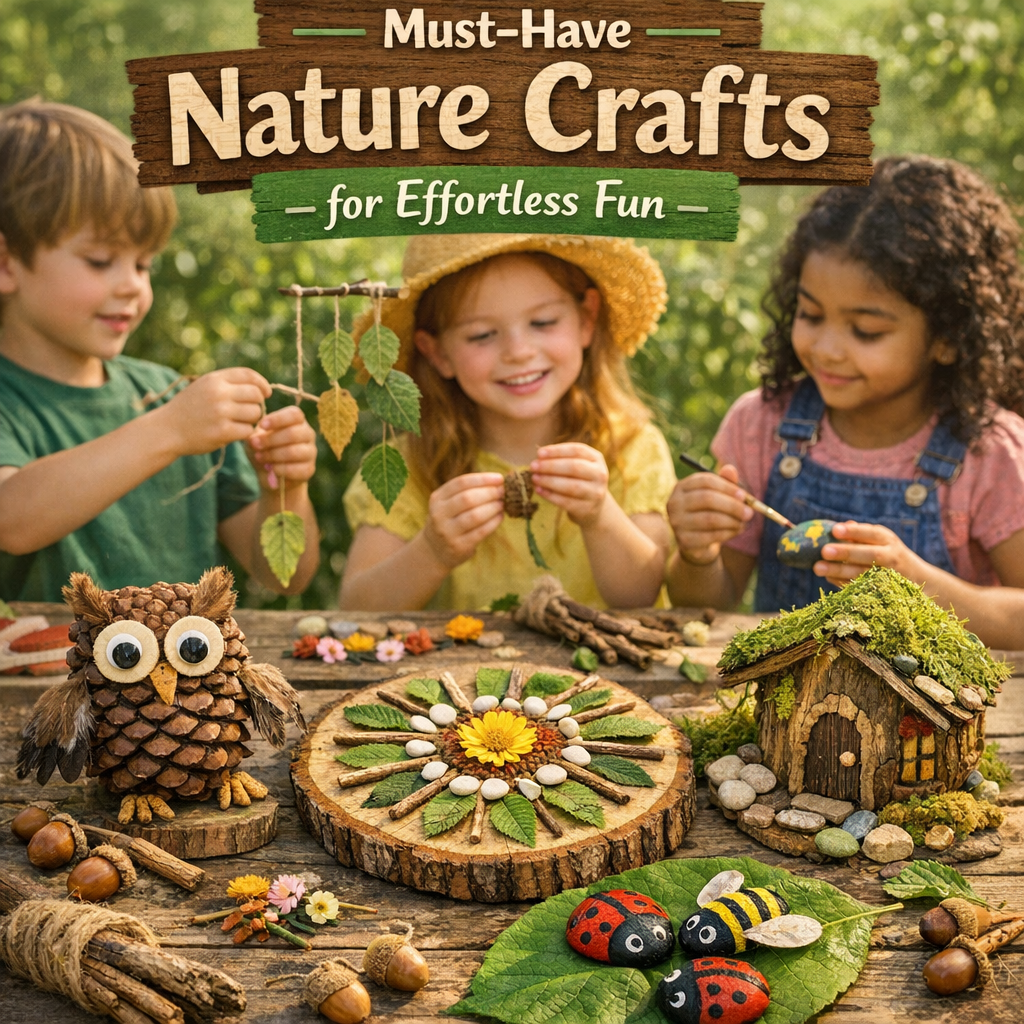
Nature crafts offer more than just an opportunity to create beautiful artwork. They foster a deeper connection to nature and help children understand the importance of ecological conservation. By working with materials sourced from the environment, children not only develop artistic skills but also learn about sustainable practices and the benefits of reusing natural resources.
The Benefits of Nature Crafts
– Environmental Education: Through crafting, children learn about different materials and their origins.
– Promotes Creativity: Using natural materials can inspire unique creations that wouldn’t be possible with store-bought supplies.
– Encourages Outdoor Play: Gathering materials promotes exploration and active engagement with the outdoors.
– Teaches Resourcefulness: Kids learn to make the most out of limited resources by transforming ordinary items into creative projects.
Must-Have Nature Crafts for Eco-Friendly Kids
Here, we explore various nature craft ideas that eco-friendly kids will love, providing step-by-step instructions and tips to ensure effortless fun.
1. Leaf Printing
Materials Needed:
– Various leaves
– Non-toxic paint
– Paper or fabric
– Brushes
Instructions:
1. Gather different shapes and sizes of leaves.
2. Use a brush to paint one side of the leaf.
3. Press the painted side onto paper or fabric to transfer the paint.
4. Lift the leaf to reveal the print and let it dry.
Tips:
– Experiment with different patterns by layering leaf prints.
– Use fabric paint for a more permanent design on clothing or bags.
2. Pine Cone Bird Feeders
Materials Needed:
– Pine cones
– Peanut butter or soy butter
– Birdseed
– String
Instructions:
1. Tie a string securely around the top of a pine cone, creating a loop for hanging.
2. Spread peanut butter or soy butter over the pine cone.
3. Roll the pine cone in birdseed, ensuring an even coating.
4. Hang on a tree for birds to enjoy.
Benefits:
– Supports local wildlife.
– Teaches children about bird species in their area.
3. Nature Mandalas
Materials Needed:
– Stones, leaves, flowers, twigs
– Flat surface
Instructions:
1. Collect various natural materials during a nature walk.
2. Arrange the materials in concentric circles to create a mandala pattern.
3. Encourage kids to use symmetry and balance in their designs.
Educational Value:
– Enhances math skills through symmetry and pattern recognition.
– Instills patience and planning.
4. Stick Weaving
Materials Needed:
– Sticks (approximately the same length and thickness)
– Yarn or hemp string
Instructions:
1. Create a “loom” by using two sticks and tying them together in an “X” shape.
2. Wrap yarn around the sticks in a criss-cross pattern to form the weaving base.
3. Weave additional yarn through the base using an over-under technique.
Learning Outcomes:
– Improves fine motor skills.
– Introduces basic weaving techniques.
5. Pebble Art
Materials Needed:
– Smooth pebbles
– Acrylic paint
– Paintbrushes
– Varnish (optional)
Instructions:
1. Clean and dry the pebbles.
2. Paint designs or characters on the stones using acrylic paint.
3. Allow to dry and coat with varnish for durability.
Creative Insights:
– Encourages storytelling through character creation.
– Provides an opportunity for open-ended artistic expression.
6. Flower Pressing
Materials Needed:
– Fresh flowers
– Heavy books or flower press
– Paper
Instructions:
1. Collect flowers and leaves.
2. Place them between sheets of paper and insert them into a heavy book.
3. Leave undisturbed for 1-2 weeks until thoroughly dried.
4. Use pressed flowers for bookmarks or as decorations.
Environmental Impact:
– Supports learning about plant life cycles.
– Promotes respect for living plants.
Enhancing Learning through Nature Crafts
Crafting with natural materials provides more than just fun, crafting activities. Parents and educators can leverage these projects to integrate learning. Below are strategies to amplify the educational benefits.
Connecting Crafts with Curricula
Integrating nature crafts with educational content can enrich the learning experience:
– Science Curriculum: Discuss photosynthesis during leaf printing projects.
– Math Curriculum: Explore geometry with mandalas, focusing on symmetry and shapes.
– Art Curriculum: Study color theory and design principles through pebble art.
Encouraging Reflection and Discussion
After completing a craft, encourage reflection and discussion:
– Ask what materials they used and why.
– Discuss the environmental impact of each craft.
– Encourage sharing their creations with family members to foster communication skills.
Utilizing Technology to Expand Learning
Technology can be a powerful ally in enhancing nature crafts:
– Use apps like the Brain Baba Kids Learning App to supplement environmental learning.
– Create digital portfolios of completed crafts to track progress and accomplishments.
Practical Tips for Parents and Educators
Implementing nature crafts with eco-friendly kids can be both fun and rewarding. Here are practical tips to ensure success:
Supply Sourcing
– Local Parks: Ideal for collecting craft materials like stones and leaves.
– Backyards or School Grounds: Accessible areas often rich with suitable materials.
– Community Events: Facilitate group crafting activities where resources can be pooled.
Safety Considerations
– Always supervise children, especially when using tools or small materials that could be choking hazards.
– Opt for non-toxic materials to ensure a safe crafting environment.
Overcoming Challenges
– Urban settings may have limited materials; adapt by using city-friendly crafts like recycled paper projects.
– Engage older children with more complex crafts, such as constructing birdhouses from reclaimed wood.
Frequently Asked Questions
What age group is suitable for nature crafts?
Nature crafts can be adapted for various ages. Toddlers can engage in simple activities like leaf printing, while older kids may enjoy more complex projects like stick weaving.
How can nature crafts be incorporated into a homeschooling curriculum?
Nature crafts can easily be linked to various subjects, including science and art. They allow for experiential learning, making topics more accessible and enjoyable.
Are nature crafts suitable for group activities?
Yes, nature crafts are perfect for group settings, such as classrooms or community gatherings. They promote teamwork, sharing, and communication skills.
Can nature crafts help in developing critical thinking skills?
Certainly, engaging with natural materials encourages problem-solving as children figure out how to transform raw materials into creative artworks.
How do we ensure sustainability while crafting?
Promote sustainability by using only fallen or dead natural materials. Encourage reuse and recycling of crafting supplies whenever possible.
Conclusion: Inspire Eco-Friendly Creativity
Nature crafts offer eco-friendly kids a powerful medium to explore their creativity while promoting environmental awareness. Incorporating these projects into daily activities can provide hours of delightful engagement and education. Whether crafting at home or in a classroom, it’s crucial to instill a love for nature and a respect for our planet.
Parents and educators can further enhance this learning by exploring additional resources and tools, such as the Brain Baba Kids Learning App, for comprehensive educational support. Don’t wait—start your crafting journey today and inspire a greener, more creative generation!