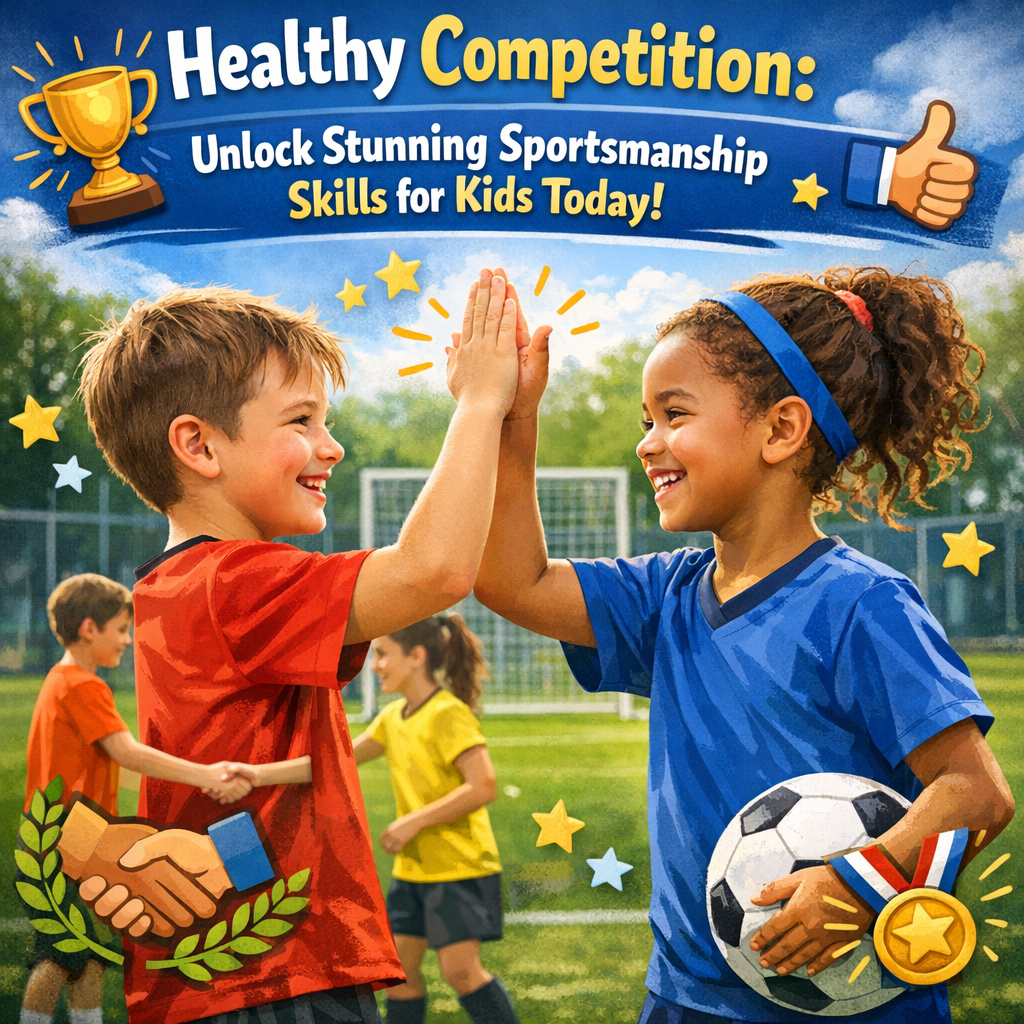
Healthy Competition: Unlock Stunning Sportsmanship Skills for Kids Today!
In today’s fast-paced world, the concepts of healthy competition and sportsmanship are more relevant than ever. Encouraging children to engage in activities that promote these values can lead to lifelong benefits. But how exactly can we foster these skills in our kids? In this article, we dive deep into the importance of healthy competition and how parents and educators can instill outstanding sportsmanship in young minds.
Understanding Healthy Competition
What Constitutes Healthy Competition?
Healthy competition is about striving to improve and achieve new personal bests while maintaining respect for others. It’s not just about winning; it’s about effort, growth, and integrity. Here’s what healthy competition involves:
– Encouraging Personal Growth: Focus on self-improvement rather than solely aiming to outperform others.
– Fostering Camaraderie: Building positive relationships with peers through mutual respect and support.
– Developing Resilience: Learning to handle setbacks gracefully and using them as stepping stones to future success.
– Instilling Discipline: Providing a framework for children to understand dedication and hard work.
Related Article: The Role of Resilience in Child Development
The Importance of Healthy Competition in Child Development
Engaging in healthy competition from a young age promotes several key developmental benefits:
– Emotional Intelligence: Children learn to manage emotions effectively, handling wins and losses with maturity.
– Social Skills: Participation in competitive activities enhances communication and cooperative skills.
– Self-Esteem: Achievements boost a child’s confidence, leading to a positive self-image.
– Motivation to Learn: The desire to improve encourages a love for learning and discovery.
Learn more about boosting children’s self-esteem
Teaching Sportsmanship in Kids
Best Strategies to Instill Sportsmanship
Sportsmanship is the ability to maintain a positive attitude, respect opponents, and accept results gracefully, regardless of the outcome. To instill these values in kids, consider these strategies:
1. Model Positive Behavior: Demonstrate respectful interactions and maintain a positive attitude during competitions.
2. Encourage Empathy: Teach children to consider others’ feelings and perspectives in competitive settings.
3. Celebrate Effort: Focus on acknowledging hard work and improvement rather than just outcomes.
4. Set Clear Expectations: Define acceptable behaviors and emphasize the significance of respecting rules.
Activities to Promote Sportsmanship
Implementing activities that emphasize sportsmanship encourages children to practice these skills:
– Role-Playing Scenarios: Engage kids in role-playing to demonstrate respectful responses in various situations.
– Team Sports: Enroll children in team sports to teach cooperation, support, and collective success.
– Sportsmanship Journals: Encourage kids to keep journals reflecting on their experiences and growth in sportsmanship.
Discover more team-building activities for kids
Balancing Competition and Cooperation
How to Encourage Cooperation Alongside Competition
Balanced activities where competition and cooperation coexist promote comprehensive skill development:
– Collaborative Challenges: Activities where kids must work together to succeed, fostering teamwork within a competitive context.
– Pair Challenges: Pair children with different skill levels to support one another’s growth.
– Fun Competitions: Organize events focusing on fun and learning rather than just competing.
Download the Brain Baba Kids Learning App to access interactive games that balance competition and cooperation perfectly.
Embracing Failures and Celebrating Success
The Importance of Failure in Learning
Failure is an essential part of learning. It provides opportunities for reflection and growth:
– Normalizing Mistakes: Teach children that errors are part of learning, promoting a growth mindset.
– Analyzing Setbacks: Guide them to understand failures and develop strategies for improvement.
– Perseverance: Encourage resilience by pushing kids to continue striving despite difficulties.
Celebrating Achievements
Recognizing successes, big or small, fosters motivation and encourages continuous effort:
– Personal Bests: Celebrate personal achievements to show that improvement is valuable.
– Team Accomplishments: Acknowledge the role of teamwork in collective successes.
The Role of Parents and Educators
How Parents Can Foster Healthy Values
Parents play a crucial role in nurturing healthy competition and sportsmanship:
– Provide Encouragement: Support children’s efforts and avoid placing undue pressure to win.
– Maintain Perspective: Focus on the lessons learned from competition rather than solely on winning or losing.
– Engage in Open Conversations: Discuss experiences to reinforce positive lessons and understand challenges.
Educators’ Contributions
Educators can significantly influence children by creating environments that support balanced competition:
– Curriculum Design: Incorporate activities promoting balanced competition in learning experiences.
– Recognition Systems: Implement systems that reward sportsmanship and effort alongside achievements.
– Conflict Resolution: Teach problem-solving skills that enable students to handle disagreements constructively.
Frequently Asked Questions
What is the best age to introduce competition to children?
Introducing competition is beneficial in early childhood, starting with cooperative games where the emphasis is on participation and enjoyment rather than winning. As children mature, structured competitive environments can be introduced gradually.
How can I help my child handle losing gracefully?
Encourage your child to view losses as opportunities to learn and improve. Highlight their efforts and teach them to appreciate the skills and strengths of others. Practicing gratitude and humility can also be impactful.
How do I balance competition and cooperation in school settings?
Balance can be achieved by designing activities that require teamwork to achieve goals, alongside those where individual performance is assessed. This approach fosters both collaborative and competitive skills.
What role does praise play in encouraging sportsmanship?
Praise is essential in reinforcing positive behavior. Acknowledging sportsmanship emphasizes its importance, motivating children to adopt these values naturally.
How can digital tools enhance children’s learning experiences in competition and sportsmanship?
Digital tools like educational apps can offer interactive learning experiences and simulate competitive environments safely. These platforms provide valuable lessons in sportsmanship and competition with measurable outcomes.
Conclusion
Healthy competition and sportsmanship are vital skills that lay the foundation for personal and social development in children. By instilling these values early on, parents and educators can equip kids to handle life’s challenges with grace and integrity. Engage with these strategies to foster a generation of resilient and respectful individuals.
For more engaging resources, consider exploring interactive tools like the Brain Baba Kids Learning App that balance fun and education seamlessly. Embrace the journey of guiding your children through competitions with a spirit of excellence and sportsmanship. Let’s pave the path for successful and fulfilling futures for our children today!