Creative Thinking Mastery: Unlock Stunning Play-Based Strategies
In today’s rapidly evolving world, the ability to think creatively is more crucial than ever, not just for individuals but as a foundational skill for the next generation. Creative thinking, often fostered through play-based strategies, is essential for problem-solving, innovation, and adaptability. In this article, we explore how parents and educators can unlock the potential of creative thinking through engaging and effective play-based methods.
Understanding Creative Thinking
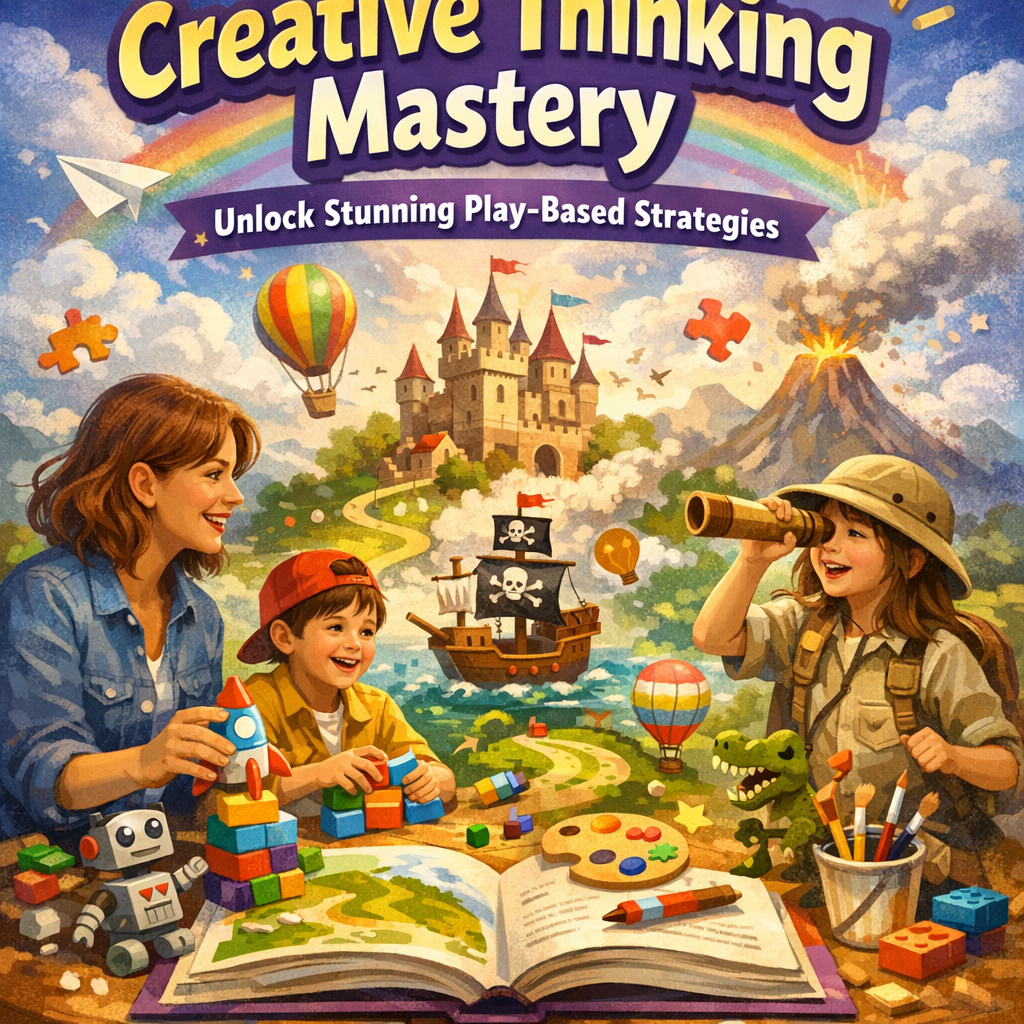
Creative thinking involves looking at problems or situations from a fresh perspective and suggesting innovative solutions. This skill is not only about artistic expression but also entails analytical and critical thinking abilities. Encouraging children to be creative thinkers equips them with the tools necessary to tackle future challenges in any field.
The Role of Creative Thinking in Child Development
Creative thinking stimulates various facets of a child’s development:
– Cognitive Growth: Strengthens problem-solving skills and enables better understanding of complex concepts.
– Emotional Development: Encourages emotional expression and self-awareness.
– Social Skills: Enhances collaboration and communication with others.
How Play-Based Strategies Enhance Creative Thinking
Play-based strategies are integral to developing creative thinking in children. They provide a natural and enjoyable way for kids to explore and expand their imaginative capabilities.
Designing a Play-Based Learning Environment
Creating an environment conducive to learning through play is essential. Here’s how you can design such a space:
1. Flexible Spaces for Creativity
Craft flexible and dynamic spaces that allow for movement and experimentation. Use the following elements:
– Open Area: Leave ample space for activities like building blocks or art projects.
– Multi-Purpose Furniture: Utilize furniture that can be easily rearranged or adapted for different activities.
2. Diverse Materials and Resources
Incorporate a variety of materials that stimulate different senses and encourage exploration:
– Craft Supplies: Include paints, clay, and drawing materials.
– Technology and Tools: Introduce children to creative technology tools for digital art or coding games.
– Nature Items: Use objects from nature, like leaves and twigs, for creative projects.
3. Safe and Encouraging Atmosphere
Create an environment where children feel safe to experiment without fear of failure. Encourage risk-taking by:
– Positive Reinforcement: Celebrate efforts and creativity rather than just successful outcomes.
– Open-Ended Questions: Pose questions that have no singular correct answer to promote critical thinking.
Internal references could link to articles on child-friendly learning environments, encouraging cognitive growth in children, and importance of safe learning spaces.
Promoting Creative Thinking Through Play-Based Activities
Explore a range of play-based activities to nurture creative thinking skills in children.
1. Imaginative Play
Engage children in imaginative play to simulate scenarios and storytelling:
– Role-Playing Games: Use costumes and props to enact roles and fictional scenarios.
– Storytelling Sessions: Encourage children to invent and narrate their stories.
2. Art and Craft Projects
Artistic endeavors are a direct gateway to creativity:
– Themed Art Challenges: Set a theme and challenge kids to create art around it.
– Recycled Material Projects: Use recycled materials for building projects, teaching resourcefulness.
3. Problem-Solving Games
Games designed to provoke critical thinking help enhance problem-solving skills.
– Puzzles and Riddles: Engage children with age-appropriate puzzles.
– Strategy Board Games: Introduce games like chess or checkers to develop planning skills.
4. Outdoor Exploration
Link creativity with the natural world to enhance awareness and curiosity:
– Nature Scavenger Hunts: Organize scavenger hunts that require creative thinking to solve clues.
– Gardening Projects: Encourage planting and nurturing a garden as a part of learning.
For more ideas, explore engaging art and craft activities and outdoor learning benefits.
Integrating Technology with Play-Based Learning
Incorporate technology thoughtfully to augment play-based learning strategies:
1. Educational Apps and Tools
Use curated educational apps focused on creativity, like the Brain Baba Kids Learning App, which offers interactive and play-based learning experiences.
2. Coding for Kids
Introduce simple coding platforms that encourage logical thinking and creativity:
– Visual Programming Languages: Tools like Scratch which allow children to create animated stories and games.
– Robotics Kits: Kits that enable children to build and program robots using basic coding skills.
3. Digital Art Platforms
Leverage digital art applications to allow children to express themselves:
– Drawing Apps: Apps that provide a virtual canvas for creativity.
– Animation Tools: Encourage storytelling through animated sequences.
Facilitating Collaborative Play
Encourage teamwork and collaborative thinking through shared activities.
1. Group Projects
Promote group projects that require collaboration:
– Building Collaborative Structures: Use building blocks for creating joint structures.
– Classroom Themed Plays: Organize plays that require group brainstorming and execution.
2. Peer Learning Sessions
Enable peer-to-peer learning where students teach and learn from each other:
– Buddy Learning System: Pair students to teach each other different skills.
– Group Problem Solving: Assign tasks that require collective effort to solve.
Encourage exploring peer learning techniques to facilitate cooperative learning.
Measuring and Encouraging Progress
Assessing creative development in children helps educators adapt their methods.
1. Observation and Feedback
Use regular observation to note progress and areas needing improvement:
– Behavior Tracking: Observe how children approach challenges and tasks.
– Feedback Loops: Provide structured feedback focusing on effort and exploration.
2. Use of Rubrics
Develop rubrics to assess creativity in a structured way:
– Creative Process Rubric: Evaluate the process of creativity, including brainstorming and implementation.
– Outcome Evaluation: Assess the creative outcome for originality and thought application.
FAQs About Creative Thinking and Play-Based Learning
What is creative thinking in education?
Creative thinking in education involves encouraging students to think outside traditional norms and approach problems with innovation and creativity. It’s vital for fostering problem-solving skills and adaptability.
How can play-based learning facilitate better understanding?
Play-based learning uses natural curiosity and playful activities to teach concepts, making learning feel more like exploration rather than rote memorization, which enhances understanding and retention.
Are there specific age groups for play-based learning?
Play-based learning is adaptable to all age groups but is most impactful in early childhood education, where natural play tendencies are strongest, promoting a love for lifelong learning.
How do I incorporate technology without losing creativity?
Balance is key. Use technology as a tool to support creativity, such as apps for digital storytelling or platforms that introduce coding. Ensure screen time encourages interactive and productive engagement.
Is there scientific evidence supporting play-based learning?
Yes, numerous studies show that play-based learning promotes cognitive, emotional, and social development. It supports creativity and improves engagement and motivation in educational settings.
Conclusion
Empowering children through creative thinking and play-based strategies is essential in cultivating a generation capable of tackling the complex challenges of the future. By designing stimulating environments, incorporating diverse activities, and utilizing technology, we can foster an ecosystem where creativity thrives. Begin your journey by implementing these strategies and witness firsthand the transformative power of creativity in education. Don’t hesitate to download the Brain Baba Kids Learning App to further enhance your child’s creative learning experience.
Embark on this enriching journey today, and watch as your child’s imagination blossoms into a powerful tool for success.