Sensory Play: Must-Have Ideas for Effortless Baby Development
Incorporating sensory play into your child’s daily routine can significantly enhance baby development. As parents and educators look for innovative ways to nurture growth and learning, understanding how sensory activities contribute to cognitive, emotional, and physical progress is crucial. This guide will delve into the power of sensory play and provide you with creative and practical ways to engage your child. By the end, you’ll be armed with actionable ideas and strategies for fostering growth through engaging activities.
Understanding Sensory Play and Its Importance
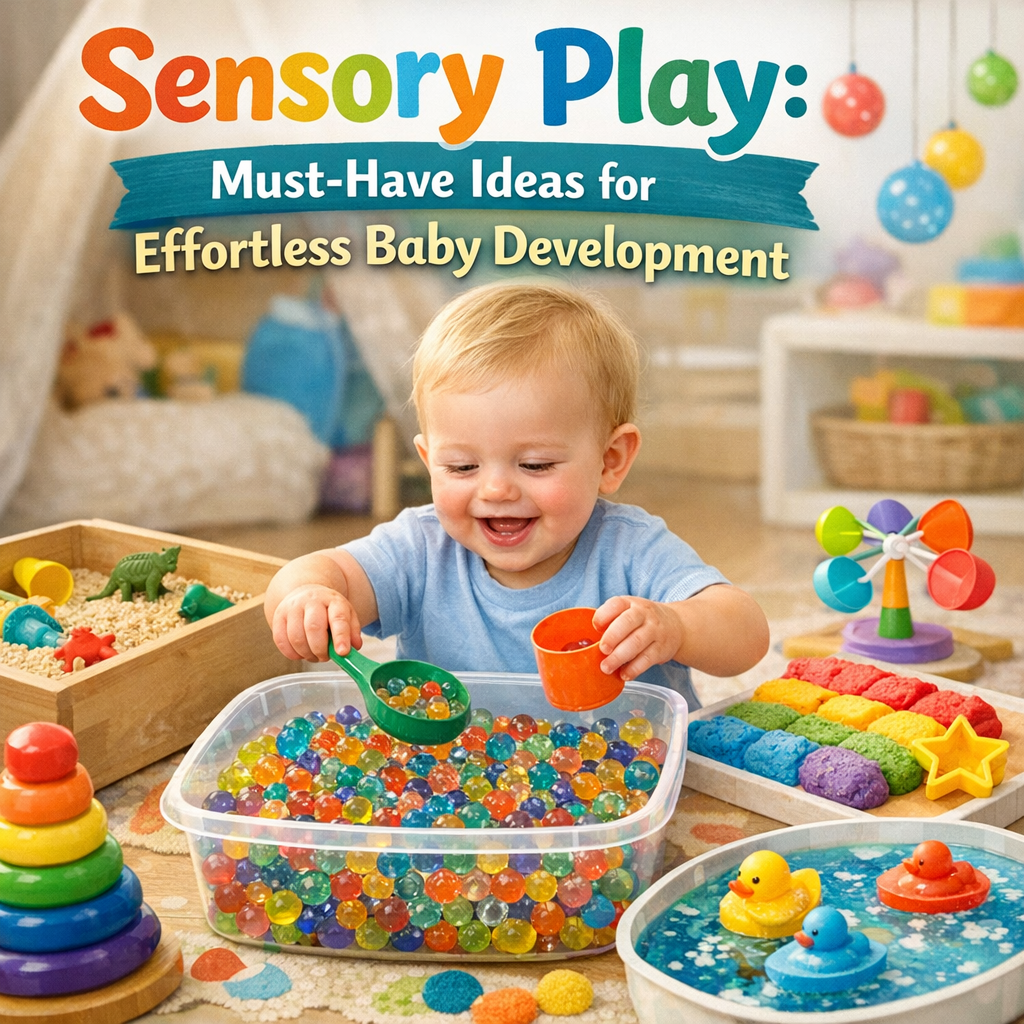
What is Sensory Play?
Sensory play involves activities that stimulate a child’s senses – touch, smell, taste, sight, hearing, and kinesthetic awareness. This type of play is foundational in baby development, as it encourages exploration and usually involves creativity and problem-solving. By interacting with different textures, sounds, and materials, babies learn about their world in an interactive and enjoyable way.
Benefits of Sensory Play for Baby Development
Sensory play is much more than simple entertainment; it plays a significant role in baby development:
– Cognitive Growth: Engaging different senses helps build neural pathways, enhancing learning capacity.
– Motor Skills: Activities such as manipulating clay or water play improve fine and gross motor skills.
– Language Development: Describing textures and actions increases vocabulary and communication skills.
– Social Interaction: Sensory play facilitates social interactions and sharing when done in groups.
Must-Have Sensory Play Ideas
1. Texture-Based Exploration
Creating a texture-rich environment can enrich your baby’s tactile experiences:
– Sensory Bins: Fill bins with rice, pasta, or sand to allow your child to explore different tactile materials.
– Fabric Swatches: Use swatches of various fabrics like silk, wool, and velvet for babies to touch and feel.
– DIY Play Dough: Make play dough with different colors and scents to engage multiple senses.
2. Sound and Music Activities
Sound stimulates auditory senses and helps babies identify different noises:
– Musical Instruments: Introduce simple instruments like tambourines or maracas.
– Nature Sounds: Play sounds of rain, birds, or ocean waves to relax and stimulate your baby’s listening abilities.
– DIY Shakers: Fill plastic bottles with rice or beans to create homemade shakers.
3. Water-Based Sensory Play
Water play is a versatile and engaging way to aid baby development:
– Bath Time Fun: Incorporate floating toys and bubbles.
– Pouring Stations: Use cups and small pitchers for pouring exercises.
– Foam Play: Create structures with soap foam for tactile exploration.
4. Taste-Safe Sensory Play
For babies inclined to explore with their mouths, ensure items are safe to taste:
– Edible Finger Paints: Use yogurt mixed with food coloring for safe art fun.
– Fruit and Vegetable Sorting: Introduce different fruits and vegetables, discussing color and taste.
– Flavored Ice Cubes: Freeze juice into cubes for sucking and tasting experiences.
5. Visual Stimulation Activities
Visual activities enhance sight and help with attentiveness:
– Light Tables: Use colored objects on a light table for visual effects.
– Rainbow Bottles: Fill bottles with colored water and glitter for visual tracking.
– Color Sorting Games: Use colored blocks to aid in color recognition.
Enhancing the Sensory Experience
Creating a Safe and Stimulating Environment
Ensure that the sensory play setting is safe and well-equipped:
– Easy Accessibility: Arrange materials within reach of your baby.
– Safety First: Avoid small, swallowable items and ensure all materials are non-toxic.
– Comfortable Space: Use soft mats or padded areas to prevent any injuries during play.
Tailoring Activities to Developmental Stages
Adapting activities that match your baby’s growth stage is essential:
– Infants (0-6 months): Focus on light and sound exploration.
– Mobile Babies (6-12 months): Introduce more tactile and motor skills activities.
– Toddlers (12 months+): Incorporate more complex problem-solving games like puzzles.
Incorporate Technology for Interactive Learning
While traditional methods are effective, integrating technology can further stimulate learning.
– The Brain Baba Kids Learning App is an excellent tool for interactive and fun learning activities. Download the app for kids for a variety of educational games that can complement physical sensory activities.
FAQ Section
What are the best sensory activities for newborns?
Newborns benefit from activities that stimulate the senses of sight and hearing:
– High-Contrast Cards: Black and white cards captivate their attention.
– Soothing Sound Machines: Gentle lullabies or white noise can help with sleep.
How does sensory play facilitate learning?
Sensory play supports the development of fine and gross motor skills, enhances language abilities, and encourages social interactions. It lays the groundwork for complex cognitive development by promoting experimentation and exploration.
Are there any safety concerns with sensory play?
Always ensure activities are supervised, avoid small objects that could cause choking, and use non-toxic materials. Regularly check toys and materials for damage or wear that could pose a hazard.
Can sensory play be beneficial for children with developmental delays?
Yes, sensory play is particularly beneficial as it can be tailored to suit individual learning paces. It aids in improving attention spans, reducing anxiety, and providing a platform for overcoming developmental challenges.
How often should I incorporate sensory play into my child’s routine?
Incorporate sensory play into daily routines to continually stimulate development. Flexible, varied experiences ensure that your child remains engaged and benefits fully.
Conclusion
Sensory play is an indispensable tool for promoting effortless baby development. By implementing the strategies and activities outlined in this guide, parents and educators can create rich environments that foster growth across multiple dimensions. Explore further resources on our site for additional insights and tips, and don’t hesitate to download the Brain Baba Kids Learning App for an enhanced learning journey. Embrace sensory play as a joyful, educational experience that will set the foundation for your child’s future learning success.